

UCOSP is a program that brings together students from across Canada to work together on open source projects. Students learn how open source software development takes place, practice distributed development, and have the opportunity to work on project with knowledgeable industry or faculty mentors on software with real users.
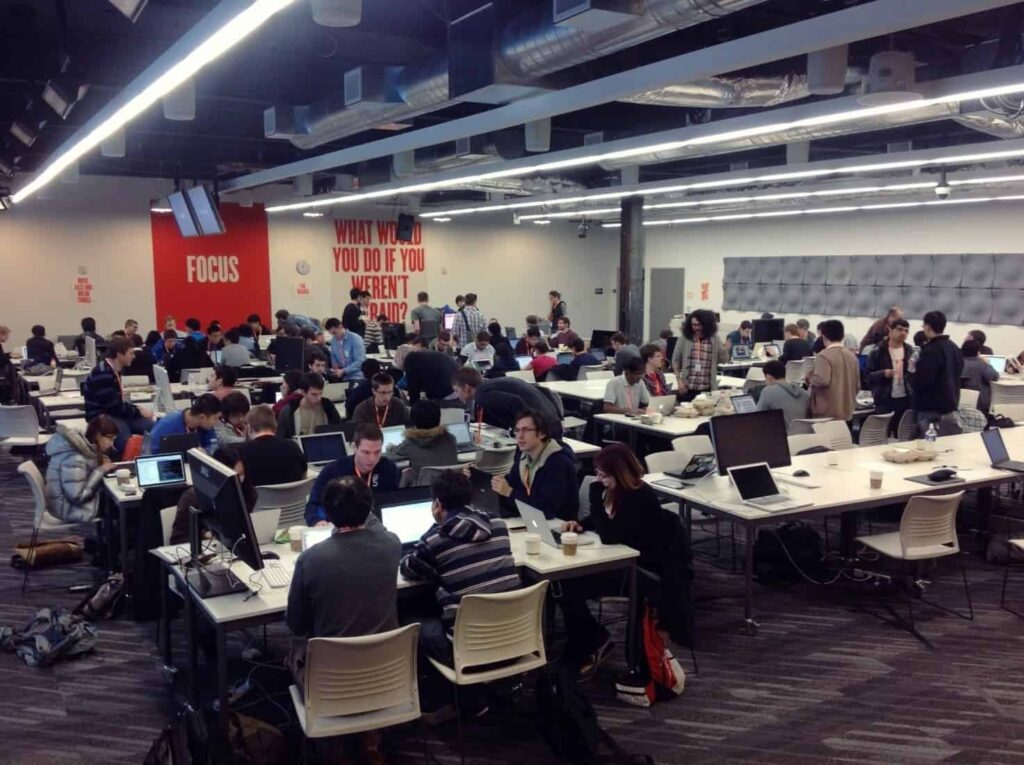
Who are we?
UCSOP is run by a steering committee of faculty members from several Canadian Universities under the umbrella of the Canadian Association of Computer Science.
Why are we doing this?
Software development is no longer bound by time zones or national borders. Projects of all kinds – academic, commercial, and open-source, as well as Canadian one – Casinovalley.ca, have their GUI designers in Boston, their database team in Bangalore, and their testers in Budapest and Buenos Aires. For example, Airbnb.com, which companies are located in 11 countries around the world: Germany, United States, China, Japan, and others. Working effectively in such teams is challenging: it requires strong communication skills, and makes proper use of coordination tools such as version control, ticketing systems, code review and continuous integration more important than ever. But it is also an opportunity for students to build ties with peers across the country and around the world.
What we are looking for right now:
- Students: Work on an open-source project with other students from across the country – for credit! What could be better? Find out how to apply.
- Faculty mentors: We are always happy to welcome new schools or new faculty supervisors.
- Open source project mentors: Are you involved in an open source project? Help a team of students make a contribution.
- Sponsors: We need your help to bring students together for a code sprint. And – hint, hint – UCOSP participants will be looking for employment.
Fall semester timelines
- Mid-August: finalize which open source projects will be participating
- Mid-August: start matching student with projects
- Early September: teams have their first online meeting and start work
- Third weekend in September: co-located code sprint (locations vary year to year) for all participating students
- Early December: work on projects wraps up
Winter semester timelines
- Late October: finalize which open source projects will be participating
- Early December: start matching student with projects
- Early January: teams have their first online meeting and start work
- Third weekend in January: co-located code sprint (locations vary year to year) for all participating students
- Early April: work on projects wraps up
Some more information
Which gives UCOSP students:
- Experience: learn about open source software development and how to work together with a team that’s geographically distributed.
- Credit: Given to to you by your home university, typically as part of a capstone course.
- A chance to meet and work with students from all across Canada.
- A job? UCOSP puts you in contact with many people in the software industry, many of whom might be able to hire you.
Projects did UCOSP students work on:
- Review Board
- Umple
- Firefox debugger
- Formulize
- Safe Browsing and Tracker Prevention
- Firefox for iOS
- Rewrite the Firefox internal configuration user interface (“about:config”) using Web technologies
- Firefox Code Coverage
- Firefox React debugger
- Firefox Developer Tools – Inspector inline editor widgets
- Mozilla Taskcluster Resource Monitoring and Management
- Swift Support in WALA
- Safe Browsing and Tracker Prevention
- Markus
- Firefox Developer Tools – 3D Z-index Tool
- TaskCluster-Pulse
- Mylyn
- Pontoon
- FlyWeb
- HTML5 Applications with BlackBerry
- Eclipse Projects
- Freeseer
- The Technology Explorer for IBM DB2
- Basie on Pinax (on Django (on Python))
- Fab4browser
- POSIT
- Encyclopedia of Life
- Opencast Matternhorn
UCOSP Mentors
- Stefan D. Bruda
- David Hughes
- Derek Reilly
- Aaron Langille
- Olivier Gendreau
- Brian Fraser
- Robert Mercer
- Faheem Ahmed
- Kevin O’Neil
- Marc Frappier
- Eleni Stroulia
- Meghan Allen
- Robert Walker
- Greg Klotz
- Stefan Kremer
- Rasit Eskicioglu
- Przemyslaw Pochec
- Timothy Lethbridge
- Amy Felty
- Daryl Hepting
- Chanchal Roy
- Andrew Petersen
- Byron Weber Becker
- Angele Hamel
- Bil Tzerpos
- Bishop’s University
- Brock University
- Dalhousie University
- Laurentian University
- Polytechnique Montréal
- Simon Fraser University
- The University of Western Ontario
- Thompson Rivers University
- Thompson Rivers University
- Université de Sherbrooke
- University of Alberta
- University of British Columbia
- University of Calgary
- University of Guelph
- University of Guelph
- University of Manitoba
- University of New Brunswick
- University of Ottawa
- University of Ottawa
- University of Regina
- University of Saskatchewan
- University of Toronto Mississauga
- University of Waterloo
- Wilfrid Laurier University
- York University
A brief history
Since September 2008, undergraduates from several schools in North America have been taking part in joint capstone projects in order to learn first-hand what distributed development is like. Previously run as a pilot project, UCOSP has emerged into a truly national program.
Information about previous years is available here.