
Explore university computer science labs across Canada where students are building transparent, open-source gambling platforms that rival commercial operations. These academic projects demystify the algorithms behind everything from platforms like https://moonbet.co/casino/bitcoin-roulette/ to sports betting engines, making previously proprietary technology accessible for education and innovation. Students gain hands-on experience with probability engines, random number generation, blockchain integration, and user interface design while contributing code that anyone can examine, modify, and learn from.
Canadian universities have emerged as unexpected leaders in open-source gambling technology development, driven by professors who recognize that understanding gaming mechanics requires building real systems, not just studying theoretical models. These projects operate in a unique space where academic freedom meets practical application, allowing teams to create fully functional platforms that demonstrate responsible gaming features, fairness verification systems, and transparent odds calculations. Unlike closed-source commercial solutions, these academic initiatives prioritize education and ethical development over profit.
The movement has attracted diverse participants beyond traditional computer science students. Mathematics majors contribute statistical models, business students analyze user behavior patterns, and ethics researchers examine responsible gaming implementations. Industry professionals increasingly monitor these repositories for innovative approaches to problem-solving, while smaller gaming startups adopt and modify academic code for legitimate commercial applications. This collaborative ecosystem breaks down barriers between education and industry, creating pathways for students to transition their academic work into meaningful careers while maintaining commitments to transparency and responsible technology development. The projects prove that gambling technology, often shrouded in secrecy, can serve as powerful educational tools when developed openly and ethically.
Why Universities Are Taking On Online Gambling Technology
Canadian university students collaborate on open-source gambling technology projects that prioritize transparency and fairness.
Universities across Canada have begun developing gambling technology platforms as teaching tools, research testbeds, and alternatives to commercial systems. These projects serve multiple purposes: they give computer science students hands-on experience with complex probability systems, cryptography, and fair random number generation. They also address a gap in the market for fully transparent gambling algorithms that can be audited by third parties.
Commercial gambling platforms rarely open their code for public inspection. Academic projects, by contrast, publish their source code and statistical models openly. This transparency allows researchers to verify fairness claims and students to learn how betting systems actually work under the hood. The educational value extends beyond coding. Students tackle real-world challenges like preventing fraud, managing database integrity under high load, and designing user interfaces that don’t exploit psychological vulnerabilities.
Some university-led platforms also experiment with features that commercial operators avoid, such as mandatory session limits, transparent odds displays, and self-exclusion tools built into the core architecture rather than bolted on later. These aren’t just academic exercises. They provide working prototypes that regulators and responsible gambling advocates can point to when pushing for industry-wide reforms.
The Transparency Problem in Commercial Gambling Platforms
Traditional commercial gambling platforms operate behind closed doors, creating a fundamental trust problem that affects everyone from casual players to government regulators. When the code running these systems remains proprietary and hidden, users have no way to verify whether games are truly fair or if the advertised odds match reality. This opacity becomes especially concerning given the significant financial stakes involved.
The challenge extends beyond individual players. Regulators face substantial difficulties auditing systems they cannot fully inspect, often relying on third-party testing agencies that themselves work with limited access. This creates layers of intermediaries between the actual code and those responsible for protecting public interests.
Open-source alternatives fundamentally change this dynamic by making the entire system transparent and verifiable. Anyone with programming knowledge can examine the code to confirm fairness, identify potential vulnerabilities, or suggest improvements. This transparency doesn’t just benefit technical experts—it creates accountability that protects all users.
Canadian university projects are pioneering this approach, demonstrating that gambling technology can operate with complete transparency. Student teams are building systems where the random number generators, payout calculations, and game logic are all publicly viewable. These projects prove that openness and security aren’t mutually exclusive, offering a compelling alternative model that prioritizes trust and verification over secrecy.
- Proprietary algorithms that cannot be independently audited
- Opaque random number generation processes
- Hidden house edge calculations
- Unverifiable payout percentages
- Lack of independent verification mechanisms
Teaching Ethics Through Real-World Problems
Developing gambling technology platforms offers students far more than technical skills—it creates a powerful classroom for exploring complex ethical questions. When students at Canadian universities build open-source gambling systems, they must confront real dilemmas: How do you design algorithms that prevent addiction? What data should you collect, and how do you protect user privacy? How can technology promote responsible gaming rather than exploitation?
These projects transform abstract ethical principles into tangible decisions. Students designing betting interfaces must balance engagement with safeguards, while those developing back-end systems grapple with transparency and fairness in random number generation. One University of Waterloo team redesigned their poker platform’s interface after realizing their original design encouraged impulsive betting—a lesson no textbook could teach as effectively.
The open-source development experience amplifies these learning opportunities by inviting public scrutiny and diverse perspectives. When code is open, students receive feedback not just from professors but from gaming counselors, regulators, and community advocates. This exposure helps future developers understand their social responsibility.
Faculty supervisors emphasize that wrestling with these ethical tensions prepares students for any technology career. Whether they ultimately work in gaming, fintech, or healthcare, they’ve learned to anticipate unintended consequences and design systems that prioritize human wellbeing alongside functionality.
Notable Canadian University Gambling Projects in Action
Provably Fair Gaming Algorithms from UBC
A team of computer science students at the University of British Columbia developed an innovative approach to one of online gambling’s most persistent challenges: proving that games are truly random and fair. Their open-source project implements cryptographically verifiable random number generation, allowing anyone to independently verify that betting outcomes haven’t been manipulated.
The concept of “provably fair” gaming emerged from blockchain technology, where transparency is paramount. The UBC team created algorithms that generate a cryptographic hash before each game round, which players can later check against the actual outcome. Think of it as a sealed envelope that proves the result was predetermined fairly, but can only be opened after bets are placed.
What makes this project particularly accessible is its extensive documentation aimed at non-cryptography experts. The students created interactive demonstrations showing how hash functions work, why they’re important for fairness, and how players can perform their own audits using simple tools. One team member, a third-year student who joined with minimal cryptography knowledge, contributed primarily to these educational resources, proving that diverse skill levels can meaningfully participate.
The project has attracted attention from both academic researchers studying transparency in digital systems and gaming industry professionals exploring trust-building mechanisms. Several smaller online gaming platforms have already integrated portions of the codebase, while the educational materials are being used in courses on applied cryptography at other Canadian universities. The repository includes starter projects for newcomers interested in learning about cryptographic verification through practical application.
- The server generates a random seed and shares its cryptographic hash with the player before any bet is placed.
- The player provides their own seed, adding an element they control to the randomness.
- The game outcome is calculated by combining both seeds through a deterministic algorithm.
- After the game concludes, the server reveals its original seed to the player.
- The player verifies that the revealed seed matches the initial hash and that the outcome was calculated correctly from the combined seeds.
Responsible Gaming AI at University of Waterloo
Researchers at the University of Waterloo have developed an innovative open-source toolkit that uses machine learning tools to identify and address problem gambling behaviors before they escalate. The project emerged from a collaboration between computer science students and psychology researchers who recognized that early intervention could significantly improve outcomes for individuals at risk.
The toolkit analyzes patterns in player behavior, including betting frequency, session duration, and decision-making trends that may indicate problematic engagement. Rather than simply flagging high-risk users, the system provides gentle nudges and educational resources tailored to each person’s specific patterns. For instance, if someone shows signs of chasing losses, they might receive information about cognitive biases that affect gambling decisions.
What makes this project particularly inspiring is its commitment to transparency and ethical design. The team deliberately chose an open-source model so that other institutions, regulators, and even gambling operators could implement and improve upon their work. Student developers worked closely with addiction counselors to ensure the interventions were compassionate and evidence-based rather than punitive.
The toolkit includes comprehensive documentation that welcomes contributors from diverse backgrounds, including those with expertise in psychology, data science, or lived experience with gambling. This inclusive approach has attracted collaborators from multiple Canadian universities and international institutions, creating a vibrant community focused on reducing gambling-related harm through thoughtful technology. The project demonstrates how academic innovation can directly address real-world social challenges while remaining accessible to anyone interested in contributing.
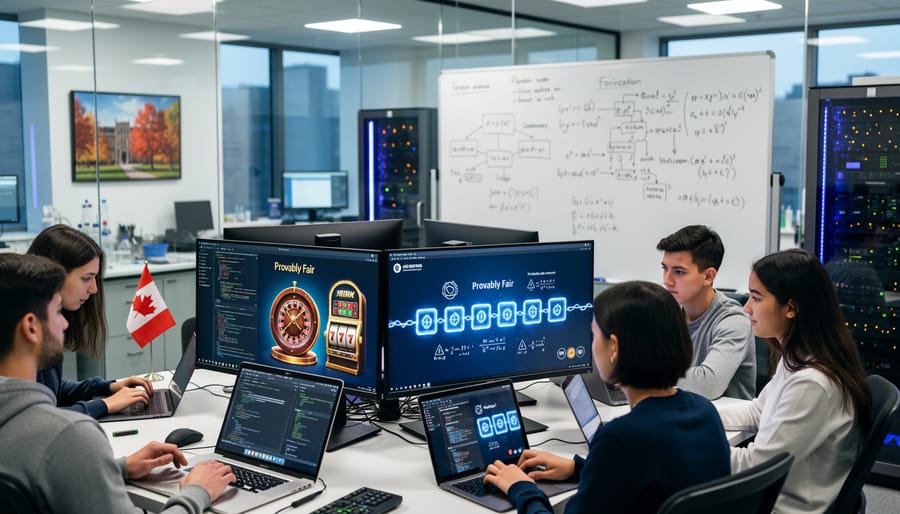
Blockchain-Based Betting Platforms from Montreal Universities
Montreal’s vibrant tech scene has fostered innovative blockchain-based betting platforms that reimagine trust and transparency in online gambling. Students at McGill University and Université de Montréal have pioneered decentralized platforms where smart contracts automatically execute wagers without requiring traditional bookmakers or centralized authorities.
One standout project, ChainBet, emerged from a collaborative hackathon between computer science and business students. The platform uses Ethereum-based smart contracts to hold funds in escrow until predetermined conditions are met, eliminating disputes about payouts. Every transaction becomes publicly verifiable on the blockchain, creating an unprecedented level of accountability. The student team deliberately designed their codebase to be beginner-friendly, with extensive documentation explaining how blockchain concepts apply to real-world gambling scenarios.
Another notable initiative focuses on provably fair gaming, where cryptographic techniques ensure neither players nor operators can manipulate outcomes. The development team, which includes students from non-technical backgrounds, emphasizes accessibility by creating visual interfaces that demonstrate how randomness verification works without requiring users to understand the underlying mathematics.
These projects address fundamental challenges in traditional online gambling: opacity in fund management, delayed withdrawals, and questions about game fairness. By removing intermediaries, transaction costs decrease significantly while payout speeds increase. The open-source nature allows anyone to audit the code, fostering community trust and continuous improvement.
Students working on these platforms gain practical experience with distributed systems, cryptography, and financial technology while contributing to solutions that could reshape digital commerce beyond gambling applications.
Pros
- Complete transparency through immutable audit trails that anyone can verify.
- No central authority needed, reducing points of failure and operator manipulation.
- Significantly lower transaction costs by removing intermediary fees.
- Provably fair outcomes using cryptographic verification that can’t be tampered with.
Cons
- Transaction speed limitations can delay bet settlement during network congestion.
- Gas fees on Ethereum fluctuate wildly and sometimes exceed the wager amount.
- Regulatory uncertainty leaves legal status unclear in most jurisdictions.
- Irreversible transactions mean user errors result in permanent fund loss.
- Technical complexity creates barriers for average users unfamiliar with wallets and keys.
The Technical Innovation Behind University Gambling Projects
Making Randomness Truly Random (and Provable)
One of the most challenging aspects of online gambling is ensuring that game outcomes are genuinely random and verifiable. Traditional online casinos ask players to trust their systems, but open-source projects from Canadian universities are changing this dynamic through transparent cryptographic solutions.
At the heart of these innovations is provably fair gaming technology. Student developers at several institutions have implemented cryptographic hash functions that allow players to verify each game result independently. Before a game begins, the system generates a random seed and shares its encrypted hash with the player. After the outcome is revealed, players can check that the original seed matches the hash, confirming no manipulation occurred.
A collaborative team from the University of Waterloo and McGill University developed a particularly elegant solution using blockchain technology to timestamp random number generation. Their open-source implementation creates an immutable record of every random event, meaning even the casino operator cannot alter past results. This transparency addresses the fundamental trust issue in online gambling.
These projects matter because they democratize fairness verification. You don’t need a mathematics degree to understand that if the encrypted value you received before playing matches the revealed seed afterward, the game was fair. By making their code publicly available, these student teams invite scrutiny from the global developer community, ensuring continuous improvement and validation of their randomness generation methods.
Smart Contracts for Automated Fair Play
Smart contracts represent one of the most exciting innovations emerging from Canadian university gambling projects, offering transparent and tamper-proof game mechanics through blockchain technology. These self-executing programs automatically enforce game rules without requiring players to trust a central authority, creating a level playing field that benefits everyone involved.
At the University of Waterloo, a team of computer science students developed an open-source poker platform where every shuffle, deal, and payout is governed by smart contract code visible to all participants. “We wanted to prove that online gambling could be completely transparent,” explains project lead Maya Chen. Their system uses cryptographic techniques to ensure cards are fairly randomized while keeping individual hands private until the appropriate reveal moment.
Similarly, a collaborative project between McGill University and the University of British Columbia created a provably fair dice game where players can verify each roll’s randomness using publicly available algorithms. The beauty of their approach lies in its accessibility—the team published detailed documentation explaining how the randomness generation works, making complex cryptographic concepts understandable for non-developers curious about the technology.
These student innovations demonstrate how smart contracts eliminate the “black box” problem in traditional online gambling, where players must simply trust operators haven’t rigged the system. By making game logic open-source and verifiable, Canadian universities are pioneering a more ethical approach to digital gaming platforms.
Data Analytics for Harm Prevention
Canadian universities are pioneering compassionate approaches to player protection through open-source data analytics tools. These projects demonstrate how machine learning can identify behavioral patterns associated with problem gambling—such as irregular betting amounts, extended play sessions, or chasing losses—while respecting player privacy and autonomy.
Students at several institutions have developed algorithms that flag concerning behaviors for intervention without being intrusive. One notable project from Waterloo created a predictive model that achieved 78% accuracy in identifying at-risk players before significant harm occurred. The team emphasized transparency in their methodology, making the code publicly available so operators could understand exactly how decisions were made.
What makes these initiatives particularly inspiring is their ethical foundation. Rather than simply maximizing engagement, these tools prioritize player wellbeing. Student developers collaborate with psychology departments and addiction specialists to ensure their interventions are evidence-based and respectful. Features include gentle nudges, reality checks about time and money spent, and voluntary self-exclusion options that empower players rather than shame them. These projects prove that technology can be a force for protection when designed with genuine care for human welfare.
| Pattern Type | Example Behaviors | Risk Level | Recommended Intervention |
|---|---|---|---|
| Chasing Losses | Rapidly increasing bet sizes after losses, depositing multiple times in short succession | High | Immediate reality check, voluntary timeout suggestion |
| Extended Sessions | Continuous play exceeding 3 hours without breaks | Medium | Time-elapsed notification, break reminder |
| Irregular Betting | Erratic stake patterns deviating significantly from baseline | Medium | Spending summary, personalized limit options |
| Increased Frequency | Login frequency rising 200%+ over 2-week period | Medium | Activity report, self-assessment tool access |
| Emotional Betting | High-velocity wagering late at night, alcohol-linked behavior markers | High | Cool-down period, self-exclusion resources |
Collaboration Stories: When Academia Meets the Gaming Industry
From Classroom Project to Licensed Casino Tool
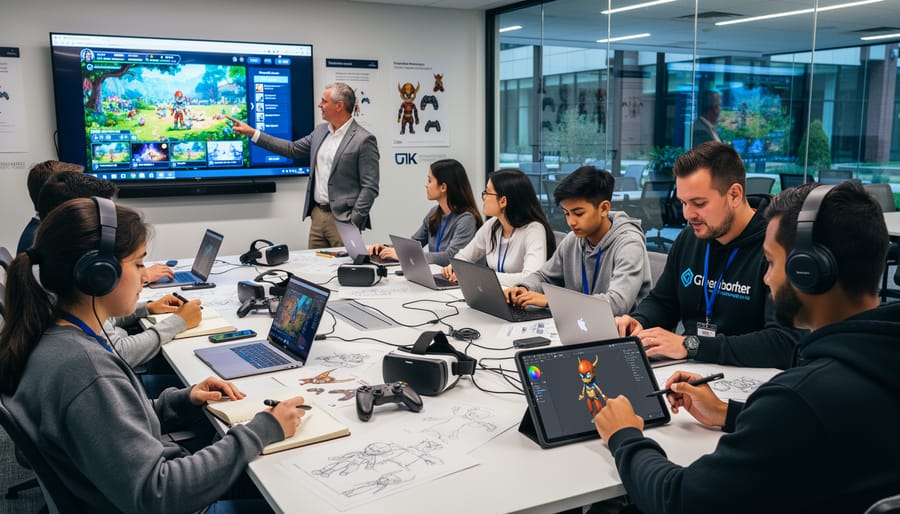
What began as a fourth-year computer science capstone project at the University of Alberta has evolved into an industry-standard compliance tool now licensed by regulated gaming operators across three provinces. The Fairness Verification Engine, originally developed by a team of five students in 2019, provides real-time audit capabilities for online casino random number generators and game outcome distributions.
The project emerged from a partnership between the university’s Department of Computing Science and the Alberta Gaming, Liquor and Cannabis Commission, which challenged students to create a transparent auditing system that could be independently verified. Team lead Sarah Chen recalls the initial skepticism: “We were just students. Nobody expected gaming regulators would actually use what we built.”
The breakthrough came when the students chose to release their work under an open-source license, allowing industry experts to review, test, and contribute improvements. This transparency proved invaluable. Within months, professional developers from gaming companies began submitting code refinements, while statisticians validated the mathematical models.
Today, the tool processes millions of game outcomes daily, providing both operators and regulators with confidence in system fairness. The original student team has since graduated, with three members now working in gaming technology firms that use their creation. Their success demonstrates how academic projects addressing real industry challenges can bridge the gap between classroom theory and practical application, ultimately benefiting both students and the broader community.
Industry Mentorship Programs That Actually Work
Several Canadian universities have developed mentorship relationships with gaming companies that honor both academic independence and open-source values. These partnerships demonstrate how industry expertise can enhance student learning without compromising educational integrity.
The University of Waterloo’s Game Theory Lab partnered with a Montreal-based gaming platform to create a mentorship model where industry professionals attend monthly project reviews. Rather than directing technical decisions, mentors pose questions that help students think critically about scalability, security, and user experience. Computer science student Maya Chen describes the experience: “Our mentor from the industry helped us see blind spots in our random number generator implementation, but she never told us what to do. She asked us questions that led us to discover better solutions ourselves.”
At Dalhousie University, a structured mentorship program pairs student teams with gaming company engineers for semester-long collaborations. The agreement explicitly states that all code remains open-source and that students retain decision-making authority. Industry mentors commit to understanding academic timelines and learning objectives rather than treating projects as free labor.
What makes these programs work is clear boundary-setting from the start. Universities establish written agreements ensuring mentors provide guidance without expecting proprietary outcomes. Companies benefit from fresh perspectives and potential talent recruitment, while students gain real-world insight into professional development practices. One participating company representative noted that engaging with academic projects helped their team rethink assumptions about open-source licensing models, creating unexpected value beyond simple knowledge transfer. This reciprocal learning exemplifies mentorship that truly serves all participants.
The Ethical Framework: Responsible Innovation in Gambling Tech
Students engage in thoughtful discussions about the ethical implications of gambling technology development and social responsibility.
Building advanced gambling platforms presents Canadian computer science students with complex ethical questions that don’t have simple answers. The tension between innovation and responsibility sits at the heart of every design decision, from how prominently responsible gaming tools are displayed to whether machine learning algorithms should predict when a user might be developing problematic behavior.
Most students working on these projects follow a framework centered on three core principles: transparency, user protection, and harm reduction. Transparency means making game mechanics visible rather than hidden, showing actual odds clearly, and avoiding dark patterns that exploit cognitive biases. User protection involves building robust age verification, self-exclusion systems, and deposit limits directly into the platform architecture. Harm reduction goes further, incorporating real-time session monitoring and interventions when behavior patterns suggest risk.
The reality is messier than the principles suggest. Students often find themselves weighing competing interests. Should the app send a notification reminding someone to return after they’ve been away for a week, or is that encouraging gambling? If you make responsible gaming settings too prominent, does that hurt the business model your academic project is simulating? These aren’t hypothetical debates. They shape actual code.
Some students wrestle with whether they should work on gambling technology at all, given documented social harms. Others argue that better-trained developers who understand responsible design will ultimately create safer products than those who never considered the ethics. The controversy itself becomes part of the educational value, forcing future software engineers to think beyond pure functionality and consider the broader impact of what they build.
Building Safeguards Into Every Line of Code
Canadian university projects demonstrate exceptional commitment to player protection by embedding responsible gaming features directly into their codebase from day one. Rather than treating these safeguards as afterthoughts, student developers integrate them as core architectural components.
At Carleton University, a team led by computer science student Maya Chen developed a loss-limit framework that allows players to set daily, weekly, and monthly spending caps before they begin playing. The system automatically suspends gameplay when limits are reached, requiring a 24-hour cooling-off period before adjustments can be made. This prevents impulsive decisions during emotional moments.
Reality checks represent another critical safeguard. These periodic notifications remind players how long they’ve been active and how much they’ve wagered. The University of Waterloo’s open-source project includes customizable reality check intervals, with default settings every 30 minutes. Students designing these features collaborated with psychology faculty to ensure messaging strikes the right balance between informative and non-intrusive.
Session time limits, self-exclusion tools, and deposit restrictions round out the protective features. What makes these implementations particularly valuable is their transparency. Because the code is open source, anyone can examine exactly how these protections work, verify their effectiveness, and suggest improvements. This collaborative approach ensures responsible gaming features evolve alongside the platforms themselves, creating safer digital environments through collective innovation.
Student Perspectives on Developing Controversial Technology
For many students, working on gambling-related projects creates an internal dialogue about responsibility and impact. Sarah Chen, a computer science student at the University of Waterloo, initially hesitated when invited to contribute to an open-source probability engine that could power casino games. “I kept thinking about my uncle’s gambling problems,” she recalls. “But then I realized that understanding these systems actually helps us build better safeguards.”
This perspective resonates across multiple campuses. Students frequently describe their work as educational demystification rather than promotion. Marcus Thompson from McGill University contributed to a project analyzing random number generation in online gambling platforms. “We’re teaching people how these systems actually work,” he explains. “Knowledge is protective—when you understand the math, you’re less likely to believe you can beat the system.”
The collaborative nature of open-source development offers students a framework for addressing concerns collectively. Teams regularly incorporate responsible gaming features, implement transparent algorithms, and document potential risks. Emily Rodriguez from the University of British Columbia notes that her team’s poker simulation includes prominent addiction resources and clear probability displays. “We’re not creating something predatory,” she emphasizes. “We’re building tools that respect users while advancing our technical skills.”
These projects ultimately teach students to balance innovation with accountability, preparing them for complex ethical decisions throughout their careers.
Getting Involved: Opportunities for Students and Developers
Getting involved in Canadian university open-source gambling projects offers an exciting opportunity to build practical skills while contributing to meaningful research. Whether you’re a computer science student, a mathematics enthusiast, or someone curious about responsible gaming technology, there’s likely a place for your talents.
Most projects welcome contributors with diverse skill sets. Developers proficient in languages like Python, JavaScript, or Java can work on core platform functionality, while those interested in data science can contribute to player behavior analysis and responsible gaming algorithms. Design-minded students can improve user interfaces, and those passionate about ethics can help develop frameworks for responsible gambling features. Even if you’re not a programmer, documentation, testing, and community management roles are essential to project success.
To get started, explore university GitHub repositories and project websites from institutions like the University of Alberta, University of Waterloo, or Simon Fraser University. Many projects maintain “good first issue” labels specifically for newcomers. Reach out to faculty supervisors or project maintainers via email, expressing your interest and available skills. Some universities offer formal pathways through research assistant positions or directed study courses that provide academic credit for your contributions.
The application process typically involves demonstrating genuine interest in the project’s goals, sharing relevant coursework or portfolio work, and committing to consistent participation. Most supervisors value enthusiasm and willingness to learn over advanced expertise. Many students report that their involvement led to conference presentations, published research papers, and strong industry connections.
Connecting with the broader open-source community through meetups, hackathons, and online forums can also open doors. These projects provide hands-on experience with real-world codebases, collaborative development practices, and complex problem-solving that employers highly value. Beyond technical skills, participants gain insights into responsible innovation and the ethical considerations surrounding gambling technology, making them well-rounded professionals prepared for thoughtful technology development.
Canadian university open-source online gambling projects represent far more than academic exercises or technical demonstrations. They embody a vision where gaming technology becomes transparent, accountable, and designed with social responsibility at its core. By opening their code to public scrutiny, these student-led initiatives challenge the traditional opacity of the gambling industry while creating educational opportunities that bridge theoretical computer science with real-world ethical considerations.
The projects profiled throughout this article demonstrate that transparency and fairness need not be competitive disadvantages. When students at institutions across Canada collaborate on provably fair algorithms, blockchain-based verification systems, and responsible gaming frameworks, they prove that innovation thrives in open environments. These efforts create ripple effects beyond campus boundaries, offering industry professionals working models for ethical implementation while giving technology enthusiasts concrete examples of how open-source principles can transform controversial sectors.
What makes these initiatives particularly powerful is their accessibility. You don’t need to be a computer science major or professional developer to contribute meaningfully. Documentation needs writers, user interfaces need designers, responsible gaming features need input from psychology and social work students, and community outreach requires diverse perspectives. Every contribution, whether code or conversation, strengthens these projects and advances the broader mission of making gaming technology more ethical and transparent.
The intersection of academia, open source, and responsible gaming is still being defined. Your involvement, whether as a student launching a new project, an educator mentoring teams, an industry professional providing real-world guidance, or an enthusiast testing and providing feedback, helps shape this emerging field. Explore existing projects, join discussions, share your expertise, and consider how your unique perspective might contribute to building gambling technology that prioritizes player protection and societal benefit alongside innovation.