
Canadian universities have been quietly building some of the most impactful open source projects of the past few years, and ten of them stand out as particularly worthy of your attention right now. These projects range from cutting-edge machine learning frameworks to collaborative tools reshaping how teams work, each backed by active communities and real-world adoption. Whether you’re looking for a project to contribute in 2026 searching for inspiration for your own work, or simply want to see what’s possible when academic rigor meets practical problem-solving, this list offers proven starting points.
What makes these projects special isn’t just their technical excellence. Each one emerged from genuine needs identified by students and faculty, then grew through collaboration across institutions and industries. They demonstrate that open source development thrives when it combines academic creativity with practical application. Some have been adopted by major companies, others power research labs worldwide, and several have spawned entire ecosystems of related tools and extensions.
The projects featured here meet rigorous criteria: sustained development activity, welcoming communities for newcomers, clear documentation, and measurable impact beyond their original institutions. You’ll find opportunities whether you code, design, write documentation, or organize communities. Each profile includes specific ways to get involved and stories from contributors who’ve shaped these projects.
How We Selected These Projects
Curating this list required a rigorous approach balancing academic merit with real-world impact. We evaluated dozens of open source initiatives across Canadian universities, looking beyond superficial metrics to find projects that genuinely demonstrate excellence and potential for 2026.
Our selection process began with nominations from UCOSP network partners, faculty advisors, and industry collaborators who work directly with student-led initiatives. We then applied six core criteria to identify the best projects to contribute to and learn from:
- Innovation: Projects addressing genuine problems with creative technical or design approaches, not rehashing existing solutions
- Real-world applicability: Demonstrated use cases beyond academic exercises, with active deployments or pilot programs in community settings
- Community engagement: Active contributor bases, responsive maintainers, and welcoming onboarding processes for newcomers
- Documentation quality: Clear setup instructions, architecture explanations, and contribution guidelines accessible to diverse skill levels
- Active development: Recent commits, regular releases, and visible momentum showing sustained effort rather than abandoned experiments
- Educational value: Projects offering learning opportunities across multiple disciplines and skill levels, from beginners to advanced contributors
We prioritized projects that bridge the gap between academic research and industry practice, offering contributors exposure to professional workflows while maintaining the experimental freedom that makes university initiatives special. Each featured project demonstrated at least four months of consistent development activity, multiple active contributors beyond the founding team, and documented evidence of external adoption or partnership. Projects that excelled in fostering inclusive participation, regardless of whether contributors code, design, write, or test, received particular consideration.
1. HealthConnect, Patient Data Interoperability Platform

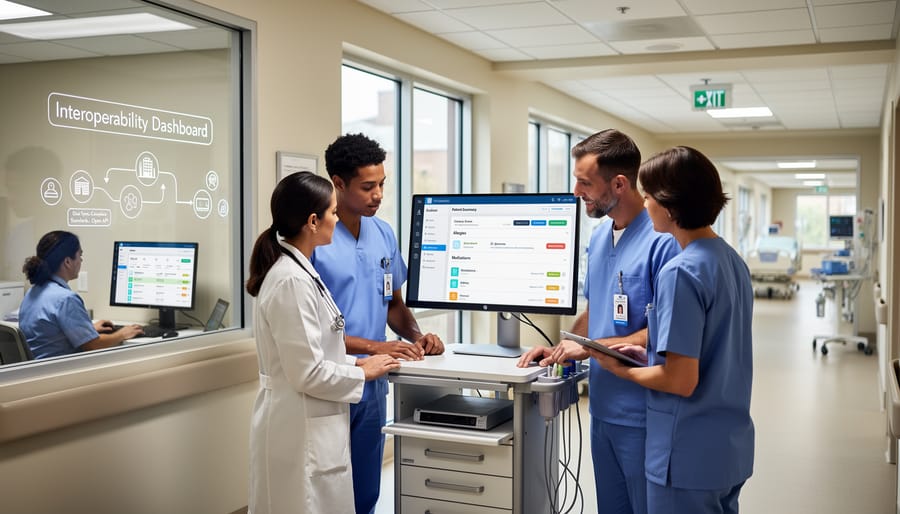
HealthConnect emerged from a hackathon at the University of Toronto’s Faculty of Applied Science & Engineering, where a team of computer science and biomedical engineering students confronted a frustrating reality: hospitals in the same city couldn’t easily share patient records. What began as a weekend prototype has evolved into a comprehensive platform that 12 hospitals across Ontario now use to exchange diagnostic imaging, lab results, and medication histories.
The technical challenge was significant. Canadian healthcare institutions operate on incompatible legacy systems, some running software from the 1990s, others on modern cloud platforms. Rather than force hospitals to replace their infrastructure, the HealthConnect team built translation layers that convert proprietary formats into standardized FHIR (Fast Healthcare Interoperability Resources) protocols. Their modular architecture means a community hospital can start with basic lab result sharing and gradually add imaging or prescription data as resources allow.
The student developers didn’t work in isolation. They partnered with clinicians at Unity Health Toronto who identified real workflow bottlenecks: emergency physicians waiting hours for records from other facilities, duplicate tests ordered because results weren’t accessible, medication errors from incomplete allergy lists. These insights shaped every design decision. The team spent months shadowing nurses and doctors, learning that a perfect technical solution means nothing if it adds three clicks to an already overwhelming shift.
Early pilot results show promise. At St. Michael’s Hospital, emergency department physicians now access complete patient histories 73% faster than with previous methods. More importantly, the project has become a teaching tool, with undergraduate students contributing code while learning about privacy regulations, healthcare standards, and the ethical weight of medical software.
2. EcoTracker, Environmental Monitoring Dashboard
EcoTracker emerged from a unique partnership between UBC’s computer science and environmental studies departments when students from both programs recognized they were tackling the same problem from opposite directions. Environmental science students needed better tools to collect and interpret field data, while computer science students wanted real-world applications for their IoT and data visualization skills.
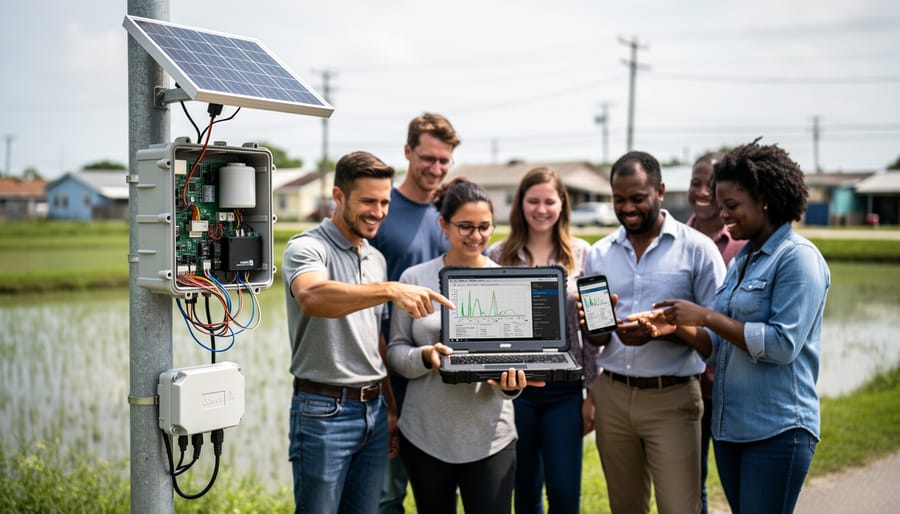
The platform connects low-cost environmental sensors to an intuitive web dashboard that makes complex ecological data accessible to non-specialists. Students deployed sensors across Metro Vancouver parks, monitoring air quality, soil moisture, temperature fluctuations, and noise pollution. What sets EcoTracker apart is its focus on community science, local residents can view real-time data from sensors in their neighborhoods and contribute observations through a mobile companion app.
The collaboration proved transformative for everyone involved. Computer science students learned to design interfaces for users with different technical backgrounds, while environmental studies students gained hands-on experience with technology that’s reshaping their field. Third-year developer Maya Chen notes that “building something ecologists actually use taught me more about user experience than any lecture could.”
Community groups in East Vancouver’s Grandview-Woodland neighborhood have used EcoTracker data to advocate for green space improvements, presenting sensor readings at city council meetings. High schools across the Lower Mainland now incorporate the platform into science curricula, with students analyzing local environmental patterns and comparing findings with other schools.
The project’s educational ripple effect extends beyond UBC. The team has published comprehensive setup guides and runs monthly workshops teaching other institutions to deploy similar monitoring networks, embodying the knowledge-sharing spirit that makes academic open source so valuable.
3. AccessLearn, Inclusive Education Tools
AccessLearn emerged from a simple observation by McGill computer science student Maya Chen during her teaching assistant duties: the university’s learning management system created unnecessary barriers for students with disabilities. Rather than accepting these limitations, she assembled a team that included developers who are blind, deaf, and use mobility aids, alongside special education specialists. Their lived experience became the project’s foundation.
The team built a suite of extensions that transform existing learning platforms into truly accessible spaces. Screen reader navigation works flawlessly without the workarounds many students currently endure. Video content automatically generates accurate captions and audio descriptions. Assignment interfaces adapt to switch controls and voice commands. The code prioritizes compatibility with assistive technologies from the ground up, not as an afterthought.
What sets AccessLearn apart is its partnership with three Montreal-area schools serving students with diverse needs. Teachers report that students who previously struggled to complete online assignments now engage confidently. One high school instructor noted that her student who uses a refreshable braille display completed a complex research project independently for the first time.
The development process itself models inclusive collaboration. Team meetings use real-time captioning and sign language interpretation. Code reviews explicitly evaluate accessibility implications. Documentation includes alternative text for all images and clear navigation for keyboard-only users.
Universities across Quebec have begun piloting AccessLearn extensions, with several Ontario institutions expressing interest. The project demonstrates that accessibility and educational excellence aren’t competing priorities. When tools work for everyone from the start, the entire learning community benefits. The team’s next phase focuses on mobile accessibility and supporting neurodivergent learning styles.
4. FarmFlow, Agricultural Resource Management System
FarmFlow emerged from a simple observation by University of Saskatchewan computer science students during a summer fieldwork placement: farmers were managing complex operations with clipboards, spreadsheets, and memory alone. What began as a capstone project has grown into a practical agricultural resource management system now used by over 140 farms across Saskatchewan, Manitoba, and Alberta.
The student team spent their first semester not coding, but interviewing farmers. They visited operations ranging from 400-acre family farms to 5,000-acre commercial enterprises, documenting pain points around equipment scheduling, crop rotation tracking, and seasonal labor coordination. This research revealed a critical requirement most agricultural software ignored: reliable functionality without internet connectivity.
FarmFlow’s offline-first architecture became its defining feature. The system runs fully on local devices, syncing data when connectivity becomes available. Farmers can log field activities, check equipment maintenance schedules, and update harvest progress from tractors, barns, or remote fields without worrying about cellular dead zones. One Maple Creek producer described it as “finally having farm management software that understands how farms actually work.”
The platform tracks equipment usage across multiple operators, prevents double-booking of machinery during critical planting and harvest windows, and generates maintenance alerts based on actual hours logged rather than estimated schedules. Crop rotation planning tools visualize multi-year field histories, helping farmers optimize soil health and yields.
Development remains student-led, with new contributors joining each academic year through directed studies courses. The project’s expansion across prairie provinces happened organically through farmer-to-farmer recommendations rather than marketing campaigns. Regional agricultural colleges now use FarmFlow as a teaching tool, giving students hands-on experience with software designed for their future industry.
5. CodeMentor, Peer Learning Platform
When computer science students at Université de Montréal noticed struggling peers hesitant to approach teaching assistants, they built something better: CodeMentor, a bilingual peer learning platform that transforms how students support each other’s academic journeys. Unlike traditional tutoring services, this platform uses smart matching algorithms to pair mentors and learners based on learning styles, schedule compatibility, and specific subject needs, not just availability.
The matching system considers dozens of factors, from programming language preferences to preferred communication modes. A first-year student struggling with Python gets matched with an upper-year mentor who remembers those same frustrations and communicates in their language of choice, whether French or English. The algorithm even accounts for personality compatibility through a brief initial survey that students complete when joining.
Success stories demonstrate the platform’s impact beyond grades. Third-year student Marie paired with first-year learner Ahmed for data structures help; six months later, Ahmed joined her research lab as a junior contributor. Engineering student Thomas credits his mentor with not just debugging assistance but career guidance that led to his first internship. The reciprocal learning surprises many mentors, explaining concepts to others deepens their own understanding while building communication skills employers value.
What started as a single-campus experiment has spread to eight institutions across Quebec and Ontario. Other universities have tested and reviewed the platform’s effectiveness, with Concordia reporting a 40% reduction in first-year dropout rates among participants. The development team continues adding features based on user feedback, including group study sessions, video call integration, and progress tracking tools that celebrate learning milestones rather than just assignment completion.
6. CivicVoice, Municipal Engagement Framework
Democracy works best when citizens actively participate, yet most municipal engagement tools remain clunky and underused. A team of political science and software engineering students at the University of Waterloo recognized this disconnect and built CivicVoice, an open source framework that’s genuinely changing how communities interact with local government.
The project emerged from a fourth-year capstone collaboration in 2023, when the team surveyed residents in three Ontario municipalities. They discovered people wanted to contribute but found existing consultation processes confusing, inaccessible, or poorly timed. CivicVoice addresses these barriers with modular tools that cities can adapt: structured feedback forms, neighborhood-level discussion forums, proposal tracking dashboards, and multilingual support.
What sets this project apart is the genuine partnership approach. Rather than building in isolation, students embedded themselves in city hall operations, shadowing clerks and attending public meetings. They conducted usability testing with seniors, newcomers, and busy parents, the very groups traditional engagement often misses. This grounded research shaped every feature, from mobile-first design to plain-language explanations of municipal processes.
The results speak clearly. Kitchener piloted CivicVoice for budget consultations in 2025 and saw participation jump 340% compared to previous years. Cambridge used it for zoning discussions, with residents particularly valuing the ability to track how their input influenced decisions. Guelph recently adopted the framework for environmental initiatives.
Beyond the code itself, the team maintains detailed implementation guides and provides setup support for interested municipalities. They’ve prioritized documentation that non-technical staff can follow, removing a common barrier for smaller cities. The project welcomes contributors who understand user experience, community organizing, or multilingual content, not just coding.
7. LabShare, Scientific Equipment Booking System
When Alex Chen started her PhD in materials science at the University of Alberta in 2024, she watched research teams compete for time on a $400,000 electron microscope. The booking process involved email chains, spreadsheets, and crossed fingers. Two years later, the system she helped build with fellow graduate students has transformed how seven departments manage 142 pieces of shared equipment.
LabShare emerged from a problem every researcher knows: valuable instruments sit idle while others can’t access them because nobody knows they’re available. The project team interviewed 87 graduate students and 23 lab managers across faculties to understand the real pain points. They learned that equipment downtime wasn’t just inefficient. It delayed dissertations, wasted grant funding, and created departmental friction.
The resulting platform does more than book time slots. It shows real-time availability, estimates queue times based on typical usage patterns, and automatically notifies backup requesters when cancellations occur. Lab managers set equipment-specific rules for training requirements, advance booking limits, and priority users. The system tracks maintenance schedules and usage statistics that help departments justify new equipment purchases with hard data.
What sets LabShare apart is its governance model. Graduate students lead development sprints, but lab managers and research coordinators hold veto power over feature decisions. This prevents the common trap of building elegant solutions that don’t match operational reality. Monthly user testing sessions in actual lab environments catch usability issues before they ship.
Three other universities have deployed LabShare since its 2025 release. The team estimates it’s recovered 1,200 equipment hours per semester at Alberta alone, turning unused capacity into completed experiments and faster research timelines.
8. TransitPulse, Real-Time Public Transportation Analytics
TransitPulse emerged from a hackathon where Simon Fraser University students tackled a familiar frustration: unreliable bus arrival predictions. The team noticed that while TransLink publishes open data feeds, existing apps struggled with accuracy during peak hours and service disruptions. Their solution processes real-time vehicle locations, historical patterns, and crowdsourced delay reports to generate predictions that consistently outperform official estimates.
What sets TransitPulse apart is its transparent methodology. The system combines GTFS-realtime data with machine learning models trained on two years of actual arrival times, adjusting predictions based on time of day, weather conditions, and special events. When SkyTrain service gets disrupted, the platform automatically suggests alternative bus routes and recalculates journey times across the entire network.
The partnership with TransLink started informally when a transit planner discovered the project on GitHub and reached out. Now TransitPulse receives direct access to internal data feeds, and the student team presents quarterly reports to transit authority stakeholders. Several algorithm improvements developed by students have been incorporated into TransLink’s own planning tools.
Community involvement drives the roadmap. Commuters submit feature requests through a public voting system, leading to additions like wheelchair-accessible route filtering, service dog-friendly transit options, and integration with bike-share availability data. The project’s project discovery guide helps new contributors understand the codebase, from frontend developers adding visualization features to data scientists refining prediction models.
Over 40 contributors have shaped TransitPulse since launch, with active development happening in Python, React, and PostgreSQL. The platform now serves 15,000 weekly users across Metro Vancouver.
9. ArchiveNow, Digital Heritage Preservation Toolkit
ArchiveNow emerged from an unlikely partnership at Dalhousie University when library science graduate student Maya Chen approached the computer science department with a problem: small cultural institutions across the Maritimes lacked the technical resources to digitize their collections before physical deterioration set in. What started as a capstone project became a full preservation toolkit now used by seventeen museums and archives across Atlantic Canada.
The collaboration between the two programs proved essential. Library science students brought expertise in archival standards, metadata schemas, and preservation best practices, while computer science students built the technical infrastructure. The result is software that guides institutions through every step of digitization, from planning and scanning to cataloguing and long-term storage, all while maintaining compliance with international archival standards.
Maritime Museum of the Atlantic became the first pilot partner, digitizing 3,000 historical photographs with ArchiveNow’s guided workflows. Museum staff, many without technical training, praised the intuitive interface that breaks complex preservation tasks into manageable steps. The toolkit automatically generates proper metadata, creates multiple file formats for different uses, and validates data integrity throughout the process.
What sets ArchiveNow apart is its focus on resource-constrained institutions. The team designed workflows that work with consumer-grade scanners and standard computers rather than requiring expensive specialized equipment. Local storage options accommodate institutions without reliable internet, while cloud backup remains optional for those who can afford it.
Student developers regularly visit partner institutions to observe workflows and gather feedback. This field research shaped features like the batch processing scheduler that lets small teams work efficiently and the built-in training modules that help volunteers learn preservation fundamentals. If you’re wondering how to pick projects that make tangible community impact, ArchiveNow demonstrates the power of academic work meeting real preservation needs.
10. StudySync, Collaborative Research Workspace

StudySync emerged from a graduate student’s frustration with juggling email threads, shared drives, and disconnected tools while coordinating a multi-institution climate study. Developed at the University of Calgary in 2024, the platform now supports over 40 research groups across disciplines from engineering to social sciences.
What sets StudySync apart is its student-led design thinking approach. The founding team conducted 60 hours of user interviews with researchers, postdocs, and undergraduate assistants before writing a single line of code. This deep listening phase revealed pain points that existing collaboration tools missed: version confusion when multiple researchers edit datasets simultaneously, the invisible labor of synthesizing group discussions into actionable next steps, and the challenge of onboarding new team members mid-project.
The platform addresses these needs through smart integrations rather than reinventing wheels. StudySync connects seamlessly with Zotero for reference management, Git repositories for code versioning, and institutional authentication systems. Researchers access everything through a unified dashboard that adapts to each project’s workflow instead of forcing teams into rigid templates.
A neuroscience lab at McMaster University reports cutting their coordination overhead by 35 percent after adoption. An interdisciplinary team studying Indigenous knowledge systems uses StudySync’s flexible permissions to control data access while maintaining collaborative momentum. Even undergraduates appreciate features like automated meeting summaries and research journal prompts that help them develop professional habits.
The development team prioritizes backward compatibility and data portability, ensuring researchers never feel locked into the platform. Their quarterly release cycle incorporates feedback from active user groups, making StudySync a genuinely community-shaped tool rather than an ivory tower solution.
How to Get Involved with These Projects
Getting involved with these Canadian university projects doesn’t require you to be a coding wizard or even a student. Each project welcomes contributions that match your skills and available time, whether that’s an hour per week or a more substantial commitment.
Start by exploring the project repositories on the Open Source Projects platform. Most teams maintain “good first issue” labels that flag beginner-friendly tasks like fixing typos, improving error messages, or adding examples to documentation. These small wins help you understand the codebase while making genuine contributions. If you’re a student at a participating university, check whether your institution offers credit for open source work through directed studies or capstone projects.
Non-developers add tremendous value through user experience testing, writing tutorials, translating interfaces, organizing community events, or managing social media channels. Projects like AccessLearn actively seek people with lived experience to guide accessibility features, while ArchiveNow needs cultural heritage expertise that code skills alone can’t provide. The academy runs quarterly skill development workshops covering Git workflows, open source licensing, community management, and technical writing.
Industry professionals can participate through short-term residencies where you mentor student teams, review architecture decisions, or share domain expertise during sprint planning sessions. Many companies now offer volunteer time off specifically for open source contributions, making it easier to support academic innovation while strengthening your own skills. Reach out directly through project Discord channels or Slack workspaces listed in each repository’s README, maintainers respond quickly and appreciate proactive contributors who show genuine interest in the project’s mission.
Common Questions About Canadian University Open Source Projects
Students, professionals, and technology enthusiasts often have similar questions when they discover these university-driven initiatives. Understanding the practicalities of participation helps demystify the process and removes barriers to getting involved.
Do I need to be a student to contribute to these projects?
No. While these projects originate from Canadian universities, most welcome contributors from any background. Industry professionals, self-taught developers, and community members all bring valuable perspectives that strengthen the work.
How much time should I expect to commit?
Contributions can range from a few hours reviewing documentation to ongoing involvement as a core contributor. Many projects structure work around academic terms, making it easier to participate during specific periods rather than requiring year-round availability.
What happens to intellectual property I contribute?
These projects typically use permissive open source licenses like MIT or Apache 2.0, meaning your contributions remain publicly available while you retain authorship credit. Each project’s repository includes specific licensing terms that clarify ownership and usage rights.
Can my company sponsor or partner with a project?
Absolutely. Organizations can provide funding, mentorship, real-world testing environments, or technical guidance. Many projects actively seek industry partnerships that help students understand professional workflows while addressing genuine business challenges.
How do I move from occasional contributor to project maintainer?
Consistent, quality contributions combined with community engagement typically lead to expanded responsibilities. Projects need reliable contributors who understand the codebase, communicate effectively, and demonstrate commitment to the project’s mission and values.
Will contributing to these projects help my career?
Yes. Employers value demonstrable skills and collaborative experience. Contributing to established open source projects shows initiative, technical competence, and the ability to work in distributed teams, all highly sought-after qualities in today’s technology landscape.
Beyond these common questions, specific concerns about technical requirements or project governance are best addressed directly with project maintainers. Each initiative has its own communication channels, typically listed in the repository’s README file. The welcoming nature of these communities means questions are encouraged rather than seen as interruptions.
Remember that everyone starts somewhere. The students leading these projects were once newcomers too, learning through doing and building confidence through small contributions. That same pathway remains open to anyone willing to engage respectfully and contribute thoughtfully to work that matters.
The ten projects featured here represent just the beginning of what’s possible when Canadian universities embrace open source collaboration. From healthcare interoperability to environmental monitoring, from accessibility tools to agricultural solutions, these initiatives prove that academic innovation can drive real-world change while creating meaningful learning experiences for students.
What started as promising recommendations in 2024 has evolved into a thriving ecosystem of mature, impactful projects that continue to grow and adapt. Each project demonstrates how bridging the gap between classroom theory and community needs creates software that truly matters. The students behind these initiatives aren’t just writing code, they’re solving problems for hospitals, farms, cities, and cultural institutions across Canada.
Whether you’re a student looking to build practical skills, an educator seeking collaboration opportunities, an industry professional wanting to give back, or simply someone who believes in the power of open source, there’s a place for you in this community. These projects need developers, yes, but they also need documentation writers, user experience researchers, testers, translators, and advocates who can share their stories.
The future of open source innovation is being written in Canadian universities right now. Your contribution, whatever form it takes, can help shape that future.