
Start by identifying overlapping interests between students and educators, then propose a specific project where both groups contribute unique skills rather than traditional teacher-student roles. A computer science professor might provide architectural guidance while students bring fresh perspectives on user experience, creating genuine partnership.
Establish clear communication channels from day one. When a team at UC Berkeley collaborated on an open-source accessibility tool, they held weekly stand-ups where a graduate student and faculty advisor shared equal speaking time. This simple structure dissolved hierarchical barriers and surfaced better ideas faster than either could generate alone.
Document everything in shared, accessible spaces. Use GitHub for code, collaborative docs for meeting notes, and public channels for discussions. Transparency builds trust across experience levels and lets everyone learn from decisions in real time. A freshman can review why a senior developer chose a particular framework, while educators see exactly where students struggle.
Create opportunities for role reversal. Let students lead certain meetings or technical decisions while educators focus on learning and asking questions. This happened naturally when a undergraduate discovered a more efficient algorithm than her mentor’s initial approach. The shift in dynamic energized the entire team and produced work neither could have achieved independently.
Educational collaboration breaks down when one party dominates or when contributions feel transactional. The most powerful partnerships emerge when everyone brings something essential to the table. Students offer energy, current technical knowledge, and unfiltered creativity. Educators provide context, connections, and hard-won experience navigating complex projects.
The result transforms both teaching and learning into something more valuable: co-creation. Projects gain depth and innovation while participants develop skills no classroom lecture can provide. That’s the promise worth pursuing.
Why Student-Educator Collaboration Works Differently in Open Source
Open source creates a fundamentally different learning environment because everything happens in public view. Traditional classrooms operate behind closed doors, where mistakes disappear after grades are assigned and projects rarely outlive the semester. In open source, every contribution becomes part of a permanent, public record. This transparency transforms the student-educator relationship from one of evaluation to one of genuine partnership.
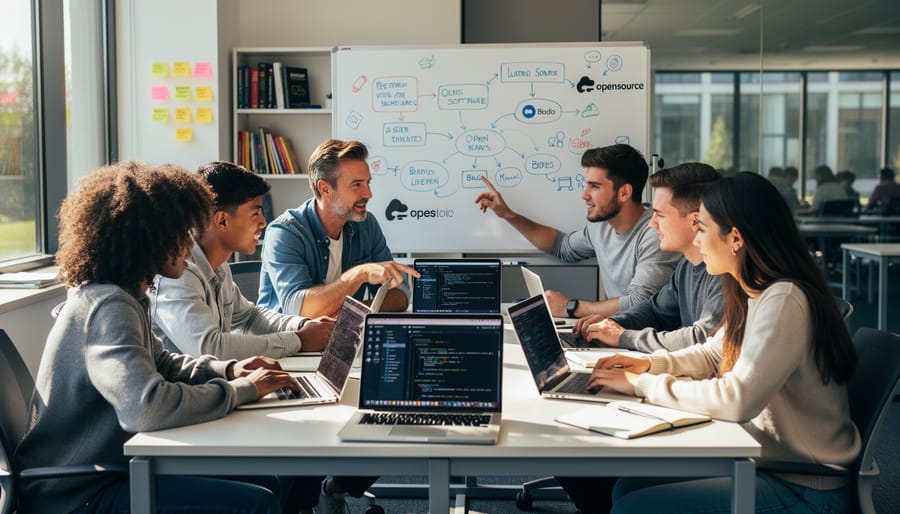
The community-driven nature of open source eliminates artificial hierarchies. When a computer science professor and their undergraduate student both submit pull requests to the same repository, the code review process treats them equally. The quality of the contribution matters more than the contributor’s credentials. This levels the playing field in ways that traditional academic settings struggle to achieve, allowing students to build confidence while educators model continuous learning.
Research confirms the benefits of open-source resources extend beyond technical skills. Students gain real-world experience with version control, documentation standards, and collaborative problem-solving. They learn to communicate with distributed teams and defend their design decisions to strangers who will actually use their work.
Take the story of Professor Maria Chen and her team at a mid-sized university. They partnered with students to improve accessibility features in a popular documentation tool. The students understood modern assistive technologies better than Maria did, having grown up with screen readers and voice navigation. Maria contributed her knowledge of documentation architecture and helped students understand the broader implications of their changes. The project shipped features that neither could have developed alone.
This collaborative model works because open source rewards contribution over credentials. A student’s bug fix that helps thousands of users carries real weight. There’s no grade inflation, no curve. The code either works or it doesn’t. This authenticity motivates students differently than assignments designed primarily for assessment. They’re building something that matters to people they’ll never meet.
The asynchronous nature of open source also changes how mentorship happens. Educators can review contributions when they have time, providing thoughtful feedback rather than rushed classroom responses. Students work at their own pace, spending extra time on challenges without holding back an entire class. This flexibility accommodates different learning styles and schedules while maintaining high standards for the final product.
The Anatomy of Successful Educational Partnerships
Building Trust and Shared Ownership
At the heart of every successful educational collaboration sits a foundation of trust. When students feel safe to experiment, ask questions, and even fail, they move beyond passive learning into active ownership. This psychological shift transforms the entire project dynamic.
Creating this environment starts with explicit conversations about roles and expectations. One professor working with students on a documentation project for an open-source mapping tool held weekly reflection sessions where everyone, including herself, shared what went well and what flopped. The vulnerability was mutual. Students quickly realized their ideas held real weight.
Research shows that psychological safety on students’ creativity has measurable positive effects. But safety alone isn’t enough. Students need genuine authority over decisions.
Consider the team that rebuilt a nonprofit’s website. The educator stepped back from technical choices, letting students debate framework selections and design approaches. Sure, she intervened when the group headed toward an unrealistic deadline. But the code architecture? That belonged to them. The result was ownership you could see in how they talked about “our codebase” and stayed engaged through challenges.
Shared investment also means shared recognition. When projects succeed, students should appear as co-authors on blog posts, present at conferences, or earn contributor credits in repositories. Their names matter. This visibility reinforces that they’re collaborators, not assistants executing someone else’s vision.
The magic happens when students stop asking “Is this what you want?” and start declaring “Here’s what we’re building.”
Balancing Guidance with Autonomy
One of the trickiest aspects of educational collaboration happens when educators must decide whether to provide direction or let students chart their own course. Too much guidance can stifle creativity and prevent the kind of productive struggle that leads to deeper learning. Too little, and students might spin their wheels for weeks, losing momentum and confidence.
The guided autonomy approach suggests that students learn best when given clear boundaries and resources, then trusted to make decisions within that framework. In open-source projects, this might mean an educator establishing the project’s core architecture and documentation standards, but leaving implementation choices entirely to students.
Consider how professor Dr. Sarah Chen approached her students’ work on a Python data visualization library. She stepped in when the team was debating whether to use a deprecated dependency that would create security vulnerabilities. That’s a learning moment where experience matters. But when they disagreed about UI design choices? She stayed quiet, letting them debate, prototype, and eventually user-test their way to a solution they owned completely.
The key is recognizing which mistakes are valuable and which are costly. A student choosing an inefficient algorithm teaches valuable lessons about performance optimization. A student accidentally exposing API keys in a public repository requires immediate intervention. One builds skills through natural consequences; the other risks real harm.
Experienced collaborators also know that stepping back doesn’t mean disappearing. Remain available for questions, offer occasional check-ins, and create safe spaces where students can request help without feeling like they’ve failed.
Creating Sustainable Collaboration Structures
Building collaboration structures that outlast a single semester requires intentional design from the outset. The most successful educational partnerships create documentation systems that capture not just code, but the reasoning behind decisions and the lessons learned along the way. When students at Oregon State University worked on their civic engagement platform, they established a practice of recording weekly decision logs and maintaining an onboarding guide that each new contributor updated. This living document became invaluable when the original team graduated.
Mentorship continuity presents a unique challenge in academic settings where participants naturally cycle through. One effective approach pairs experienced students with newcomers early in the term, creating overlap periods where knowledge transfers naturally through paired programming and code reviews. The mentor then transitions to an advisory role while remaining accessible through dedicated community channels.
Project handoff ceremonies mark another critical element. Rather than treating the end of a term as a finish line, successful collaborations schedule structured transitions where outgoing contributors present their work to incoming teams, share unfinished roadmaps, and identify specific areas needing attention. A computer science class at Georgia Tech implemented quarterly “relay meetings” where students literally passed project ownership through detailed presentations and question sessions.
Knowledge bases should include troubleshooting guides written by students who encountered and solved specific problems. These peer-created resources prove more accessible than formal documentation because they address real confusion points in language that resonates with fellow learners. Creating templates for common tasks reduces friction for new participants and ensures consistency across different contributor cohorts.
Real Stories from the Field: Collaboration in Action
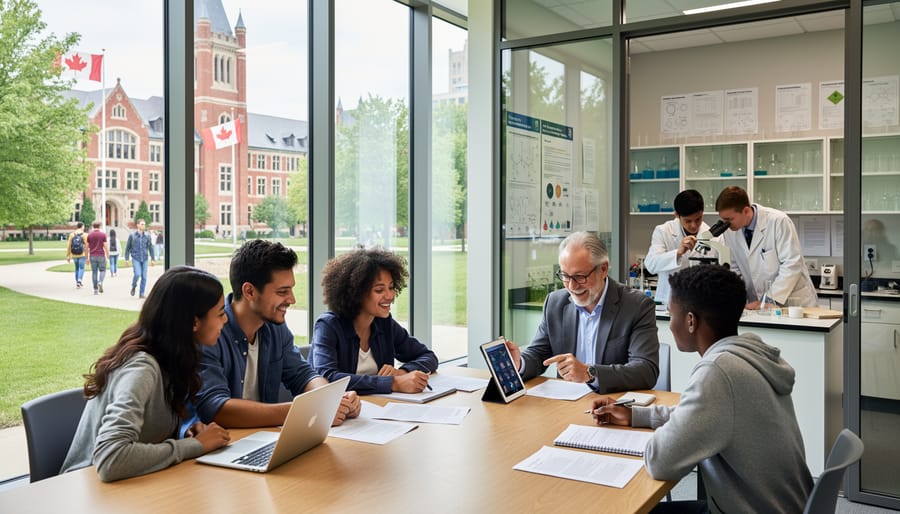
At the University of British Columbia, a team of computer science students partnered with Professor Sarah Chen to rebuild the campus accessibility mapping system. What started as a simple course project transformed into something far more impactful when students reached out to the university’s Accessibility Services department. Together, they interviewed dozens of students with mobility challenges, wheelchair users, and visually impaired community members to understand what features actually mattered. The result? An open-source navigation app that’s now used across three Canadian campuses and has been forked by universities in Australia and Germany.
The collaboration worked because Professor Chen stepped back from traditional teaching hierarchies. She attended planning meetings as an equal voice, not the final authority. Students made the technical decisions while she provided guidance on sustainable project architecture and community management. When disagreements arose about feature priorities, the team returned to their user research rather than deferring to seniority.
At Toronto Metropolitan University, a different model emerged. Engineering students working on open-source environmental sensors hit a wall with data visualization. They were brilliant hardware designers but struggled with the software side. Their instructor, Dr. James Liu, facilitated a cross-faculty partnership with the data science program. What could have been a standard assignment became a genuine collaboration when both student groups agreed to co-author their documentation and share GitHub commit access equally.
The challenges were real. Scheduling across two departments created constant friction. Different coding standards led to tense code review sessions. But the outcomes justified the struggle:
- UBC Accessibility Mapper: Student-led governance model with faculty advisor; deployed at 5+ institutions; taught team that user research beats assumptions every time
- TMU Environmental Sensors: Cross-program peer collaboration; 12,000+ downloads in first year; learned that clear communication protocols matter more than technical skill matching
- Dalhousie Medical Terminology Database: Graduate students as project leads with undergraduate contributors; adopted by 3 medical schools; discovered that defining roles early prevents territorial conflicts later
- University of Alberta Open Course Materials: Faculty-student co-creation team; 50+ courses now using shared resources; found that licensing discussions up front save painful conversations down the road
These projects share common threads. None started with perfect collaboration structures. Each team stumbled through figuring out decision-making processes, conflict resolution, and credit attribution. The UBC team nearly fractured when deciding whether to accept a corporate sponsorship. The TMU students struggled with impostor syndrome when their work gained unexpected attention.
What saved these collaborations? Honest conversation and documented processes. The Dalhousie team created a simple decision matrix that clarified when students could act independently and when faculty input was needed. The Alberta project established a contributor agreement that explicitly credited both student developers and faculty subject matter experts equally in all publications.
These stories prove that educational collaboration in open source isn’t just about producing code or content. It’s about creating environments where learning flows in multiple directions. Students bring fresh perspectives and technical fluency. Educators contribute experience and institutional knowledge. When both groups treat each other as genuine collaborators rather than playing their traditional roles, extraordinary things happen.
Overcoming Common Collaboration Challenges
Bridging the Experience Gap
The knowledge gap between educators and students doesn’t have to create barriers. Instead, it can become a foundation for deeper collaboration when approached intentionally. The key is recognizing that expertise flows both ways in open-source educational projects.
Consider the story of Professor Maria Chen and her undergraduate research team at Portland State. Rather than positioning herself as the sole authority, Chen introduced a “reverse mentoring” model. Students brought fresh perspectives on emerging technologies and user experience design, while she contributed strategic direction and academic rigor. Their campus accessibility tool became more innovative precisely because Chen asked questions instead of providing all the answers. This approach transformed what could have been a hierarchical relationship into genuine partnership.
Effective collaborations thrive on transparent communication about what each person brings to the table. Educators should be explicit about their knowledge boundaries. Admitting “I haven’t worked with that framework” creates space for students to contribute meaningfully. Students, meanwhile, benefit from articulating their learning goals upfront so educators can provide targeted guidance rather than comprehensive lectures.
Documentation practices also help level the playing field. When teams create shared knowledge bases as they work, recording decisions and technical choices, everyone contributes to the collective understanding. New contributors can catch up independently, and the project becomes less dependent on any single person’s expertise.
Managing Time Constraints and Academic Pressures
Time constraints present one of the biggest hurdles in educational collaborations, especially when students must juggle open-source contributions with exams, assignments, and fixed semester schedules. The solution starts with transparent planning. At the beginning of any collaborative project, create a shared timeline that maps academic milestones alongside project deliverables. This visual roadmap helps everyone anticipate crunch periods and adjust expectations accordingly.
Consider how students at Georgia Tech structured their collaboration with local educators on an accessibility tool. They blocked out exam weeks entirely, scheduled lighter tasks during midterms, and front-loaded documentation work for quieter periods. This approach prevented burnout and maintained steady progress without sacrificing academic performance.
Break larger projects into modular chunks that students can tackle independently during available windows. A documentation update or bug fix takes less coordinated time than architectural decisions, making it perfect for busy weeks. Faculty supporters can help by building collaborative work into existing course requirements where appropriate, transforming the collaboration from an extra burden into credit-earning coursework.
Regular check-ins matter more than marathon sessions. A brief weekly sync keeps everyone aligned and accountable without demanding hours that students don’t have. Some collaborations adopt asynchronous communication as their default, recognizing that participants operate across different schedules and time zones. This flexibility transforms time constraints from roadblocks into manageable challenges that strengthen project planning skills for everyone involved.
Navigating Differing Expectations and Goals
Educational collaborations thrive when everyone understands what success looks like from different perspectives. Educators often prioritize student learning outcomes, research contributions, and publishable results. Students, meanwhile, focus on gaining practical skills, building portfolios that impress employers, and preparing for their careers. These goals aren’t competing. They’re complementary when framed correctly.
The key is making these connections explicit from the start. A professor working with students on an open-source medical records system, for example, can design the project so students learn database architecture while simultaneously contributing code that advances the professor’s research on healthcare data privacy. Students graduate with demonstrable skills and a real project to discuss in interviews. The educator publishes findings and trains the next generation of practitioners.
Regular check-ins help maintain this alignment as projects evolve. A student discovering their passion for documentation might shift from coding to writing comprehensive guides, which serves both their career exploration and the project’s sustainability. This flexibility transforms potential friction into opportunity.
Take the story of Maria, a design student who joined a data visualization project expecting to build her portfolio. Her professor needed compelling graphics for conference presentations. By framing deliverables that satisfied both needs, Maria created visualizations that became centerpieces of academic papers while landing her a job offer from a tech company impressed by her published work. Everyone won because the goals were mapped to shared milestones rather than separate tracks.
How Industry Benefits from Academic Collaboration Models
The technology industry faces a persistent challenge: finding graduates who can contribute immediately without extensive onboarding. Academic collaboration models built around open-source projects offer a powerful solution to this problem.
When students work alongside educators on real open-source initiatives, they develop skills that traditional coursework often misses. They learn to navigate existing codebases, contribute to projects with thousands of users, and collaborate with distributed teams. One computer science professor shared how her students who participated in collaborative open-source projects received job offers 40% faster than their peers, with hiring managers citing their demonstrated ability to work in production environments.
These partnerships create tangible value for industry. A healthcare technology company partnered with a university’s data science program, presenting students with anonymized patient data challenges. The collaboration produced three novel approaches to predictive diagnostics that the company later implemented. The students gained experience solving actual industry problems, while the company accessed fresh perspectives without the cost of a full research team.
Industry professionals can engage with these collaborations in several meaningful ways. Many companies establish mentorship programs where engineers spend a few hours monthly reviewing student pull requests or providing architectural guidance. Others sponsor specific features or bug bounties within academic projects, creating structured opportunities for students to contribute to enterprise-grade software.
The open-source pipeline benefits significantly too. Students who experience collaborative development in academic settings continue contributing after graduation. They understand the value of shared knowledge and community-driven innovation. A software foundation director noted that their most consistent long-term contributors first engaged through university collaboration programs.
For industry professionals considering involvement, start small. Offer to speak at a class, review a student project, or suggest a real problem your team faces that could become a semester project. These connections strengthen the entire ecosystem, creating graduates who arrive ready to contribute from day one.
Starting Your Own Educational Collaboration
Starting a collaborative project doesn’t require institutional approval or a formal committee. You need three things: a genuine problem to solve, at least one willing partner, and a commitment to transparent communication. The best collaborations often begin with casual conversations about shared frustrations or ideas that spark mutual excitement.
Begin by identifying what you bring to the table and what gaps you need to fill. A computer science student might have coding skills but lack domain expertise in biology, while an educator might have research questions but limited technical knowledge. This complementary dynamic creates the foundation for meaningful partnership. Look for collaborators in unexpected places: campus clubs, online forums, departmental seminars, or even social media groups focused on open-source education.
Once you’ve found a potential collaborator, map out your first project together:
- Define a specific, achievable goal for your initial collaboration. “Build a data visualization tool for high school biology teachers” works better than “improve science education.”
- Choose your communication channels early. Will you use Discord, Slack, or email? Schedule regular check-ins that respect everyone’s time constraints.
- Select a platform for hosting your work. GitHub remains the standard for code-based projects, while GitLab offers integrated CI/CD features. For documentation-heavy collaborations, consider platforms like Read the Docs or even shared Notion workspaces.
- Establish clear contribution guidelines from day one. Who reviews pull requests? How do you handle disagreements? Document these decisions in a simple CONTRIBUTING.md file.
- Make your first contribution small and symbolic. A basic README file, a project outline, or a simple proof-of-concept demonstrates commitment without overwhelming anyone.
Resource requirements vary dramatically based on your project scope. Most educational collaborations start with free tools: GitHub for version control, Figma for design mockups, Zoom for video calls. You rarely need institutional funding to begin.
Consider the story of Maria and Professor Chen, who started their accessibility toolkit during office hours. They used nothing but GitHub’s free tier and weekly 30-minute conversations. Within three months, two other students joined, and a neighboring university began contributing translations. They didn’t wait for perfect conditions. They started small, stayed consistent, and let the project grow organically.
The key is momentum over perfection. Launch with what you have, document as you go, and invite others to join once you’ve established a rhythm.
Educational collaboration between students and educators goes beyond checkbox assignments and structured coursework. When these partnerships thrive, they reshape how we think about learning, teaching, and contributing to open source. Students gain confidence and real-world skills that no textbook can provide. Educators rediscover their own curiosity by working alongside fresh perspectives. The open-source community benefits from an influx of new ideas, diverse approaches, and enthusiasm that keeps projects vibrant and evolving.
The most successful collaborations share a common thread: they recognize that expertise takes many forms. A student might bring cutting-edge knowledge about emerging frameworks, while an educator offers strategic thinking and project management experience. Both matter. Both deserve respect. This mutual recognition creates environments where everyone feels empowered to contribute, question, and grow.
Think of collaboration as an ongoing practice rather than a final achievement. Your first attempt might feel awkward or produce modest results. That’s normal. Each project teaches you something new about communication, technical workflows, or how to support others effectively. These lessons compound over time.
Ready to start your own collaboration journey? Consider joining an academy program that connects students with mentors, or volunteer with an open-source project that welcomes newcomers. Look for communities that value questions and celebrate small wins alongside major milestones. The most important step is simply beginning. Your contribution, no matter how small it seems, matters to someone building, learning, or solving problems right now. Join them.