
Find the best travel eSIM in seconds by exploring university-developed open source alternatives that put transparency, affordability, and community collaboration first. Unlike commercial eSIM apps that lock you into proprietary ecosystems and opaque pricing, these student-built projects give you full control over your connectivity data, allow you to audit the code for security vulnerabilities, and often cost a fraction of mainstream options. The best part? They’re created by students who understand budget travel constraints firsthand.
University open source eSIM apps represent a growing movement where computer science and engineering students tackle real-world travel connectivity problems through their capstone projects and research initiatives. These apps typically focus on multi-carrier support, flexible data plans, and user privacy, addressing pain points that commercial providers often ignore. You’ll find projects ranging from simple carrier-switcher tools to sophisticated platforms that aggregate global eSIM providers and compare rates in real time.
Choosing the right open source eSIM app requires evaluating factors beyond just price. You need to assess community support strength, update frequency, security audit history, and compatibility with your device. Some projects excel at European travel with deep carrier integrations across the EU, while others prioritize Asia-Pacific coverage or specialized features like bandwidth monitoring and VPN integration.
This guide walks you through the selection criteria that matter most, compares the main types of university-developed eSIM apps available in 2026, recommends specific projects for different traveler profiles, and highlights common mistakes that can leave you without connectivity abroad. Whether you’re a student planning a semester exchange, an educator coordinating group travel, or a tech enthusiast who values software freedom, you’ll discover how academic innovation is reshaping affordable international connectivity.

What Makes University Open Source eSIM Apps Different
University-developed open source eSIM apps occupy a unique space between commercial travel connectivity solutions and purely experimental software. These projects emerge from computer science departments, engineering labs, and student hackathons with motivations fundamentally different from profit-driven companies. The distinction matters because it shapes everything from pricing models to feature prioritization to long-term sustainability.
Transparency stands as the defining characteristic. When a university team publishes their eSIM app code on GitHub or GitLab, anyone can inspect exactly how the application handles your data, processes payments, and connects to eSIM providers. This openness contrasts sharply with commercial apps that treat their codebase as proprietary intellectual property. You’re not trusting a marketing claim about privacy, you can verify it yourself or rely on community audits from security researchers worldwide.
The educational mission removes profit pressure that shapes commercial app development. A team of graduate students at the University of Toronto doesn’t need to extract maximum revenue per user or upsell premium features. Their success metrics center on learning outcomes, research publications, and community adoption rather than quarterly earnings. This freedom allows them to experiment with novel approaches like decentralized eSIM marketplaces or AI-powered plan recommendations without worrying whether these features will recoup development costs.
Cost advantages flow naturally from the open source model. You won’t encounter subscription fees, premium tiers, or per-profile activation charges common in commercial eSIM apps. Some university projects connect directly to wholesale eSIM providers and pass savings to users, while others aggregate multiple providers without adding markup. The catch is that support may come from community forums rather than 24/7 customer service teams, but for technically comfortable travelers, this trade-off often proves worthwhile.
Community-driven development means features get prioritized based on user needs rather than business strategy. When students from Waterloo build an eSIM app, they incorporate feedback from fellow travelers, respond to pull requests from contributors in other countries, and address real pain points they’ve experienced abroad. This collaborative approach produces tools shaped by actual users rather than product managers optimizing conversion rates.
Key Buying Factors: What to Look for in an Open Source eSIM Travel App
eSIM Provider Network Coverage and Plan Options
When evaluating a university open source eSIM app, the first thing you need to check is which eSIM providers it actually works with. Unlike commercial apps that typically partner with one or two networks, university projects vary widely in their provider integrations. Some aggregate plans from multiple carriers like Airalo, Nomad, or Holafly, while others focus on regional providers with better rates for specific continents.
Start by verifying coverage in your actual destinations. Open the app’s documentation or GitHub repository and look for a list of supported countries and networks. Don’t assume global coverage. A student project built at a Canadian university might have excellent North American and European partnerships but limited options for Southeast Asia or Africa. Check whether the app displays real-time availability or relies on cached data that might be outdated.
Pay attention to plan variety. The best apps offer multiple data amounts (500MB to 50GB), durations (one day to 90 days), and price points per destination. If an app only surfaces expensive unlimited plans or lacks short-term tourist options, it won’t serve budget travelers well. Look for transparency in pricing, including whether taxes and activation fees are disclosed upfront.
Finally, verify that provider partnerships are active. Some university projects list providers in their documentation but haven’t updated API integrations in months. Check recent commits or community forums for confirmation that purchases actually work.
Open Source License and Code Accessibility
When you look at a university eSIM app’s repository, the license file tells you what you can and can’t do with the code. The three most common licenses serve different philosophies.
MIT and Apache 2.0 are permissive licenses that let you use, modify, and even integrate the code into commercial projects with minimal restrictions. MIT is the simplest, basically “do what you want, just keep the copyright notice.” Apache 2.0 adds patent protection, which matters if the project involves novel technical processes. Both allow you to fork the app privately without sharing your changes.
GPL (General Public License) requires that any modified version you distribute must also be open source under GPL. This “copyleft” approach ensures improvements stay in the community. For travelers, it means you can always access the source code of any derivative app. For contributors, it prevents corporations from taking the project private.
You’ll find license details in the repository’s LICENSE or COPYING file, usually linked prominently on GitHub or GitLab. Check open source license permissions if you’re unsure what specific terms allow.
Code accessibility matters beyond the license. Look for readable documentation, clear commit histories, and whether the team responds to issues. An MIT-licensed project with cryptic code helps no one; a GPL project with clean documentation and active maintainers builds trust.

Active Development and Community Support
A university open source eSIM app can have excellent features on paper but fall short without active maintenance. Check the project’s GitHub repository for recent commits, ideally within the past month, indicating the team addresses bugs and updates dependencies. Look at issue response times: maintainers who reply to bug reports within days demonstrate commitment, while projects with dozens of unanswered issues raise red flags.
Documentation quality separates usable projects from frustrating ones. Strong university initiatives provide clear installation guides, API documentation, and troubleshooting steps. Browse the project’s wiki or README: can you figure out how to install and configure the app without prior knowledge?
community support proves equally vital. Active forums, Discord servers, or Slack channels where students and users help each other signal a healthy ecosystem. Check discussion frequency and whether questions receive helpful answers. A vibrant community often compensates for occasional gaps in official documentation, and engaged users typically contribute improvements that benefit everyone.
Platform Compatibility and Technical Requirements
Before downloading any university open source eSIM app, verify your device actually supports eSIM technology. Not all smartphones have this capability, check your phone’s specifications or look for “eSIM” in your device settings under Cellular or Mobile Networks.
Most university projects target Android first because it’s easier to distribute open source apps outside official app stores. iOS apps require Apple Developer Program enrollment ($99 annually), which some student teams can’t afford. You might find Android APKs on GitHub while iOS versions lag months behind or never materialize.
Check the project’s README for minimum OS versions. Many require Android 9.0+ or iOS 13+ to access eSIM APIs properly. Older devices won’t work even if they technically have eSIM hardware.
Consider whether you’re comfortable sideloading apps. University projects rarely get approved for Google Play or the App Store initially, meaning you’ll install from third-party sources. Android users need to enable “Install from Unknown Sources.” iOS users must use TestFlight or compile from source code, both require technical comfort.
Battery consumption matters for travelers. Review GitHub issues for complaints about background drain before committing.
Privacy, Security, and Data Handling
When evaluating a university open source eSIM app’s privacy and security posture, start by reviewing what personal data the app actually collects. Most legitimate projects only request your email, device identifier, and payment details for eSIM activation, anything beyond that deserves scrutiny. Check the project’s repository for a privacy policy or data handling documentation; transparent projects explicitly state what they collect, where it’s stored, and whether any data is shared with eSIM providers or third parties.
Open source code offers a unique advantage: anyone can inspect the codebase to verify that the app does what it claims. However, code visibility alone doesn’t guarantee security. Look for evidence of security audits, penetration testing, or peer review by the university’s cybersecurity program. Well-maintained projects often display audit results in their README or documentation, or at minimum show that security researchers have examined the code for common vulnerabilities like insecure API calls or exposed credentials.
Payment handling is particularly critical. The safest architecture routes payments directly to the eSIM provider through their secure payment gateway, meaning the app never touches your credit card details. Apps that store payment information locally should encrypt it properly and document their approach. Check the commit history for how the project addresses security issues, active projects patch vulnerabilities quickly and communicate openly about fixes, while abandoned projects pose real risks when traveling abroad with sensitive data.
Types of University Open Source eSIM Apps Compared
eSIM Marketplace Aggregators
eSIM marketplace aggregators function as comparison engines that pull plans from multiple eSIM providers into a single interface. Rather than visiting individual provider websites or apps, travelers can compare coverage, data limits, and pricing across dozens of networks simultaneously. University-developed aggregators typically leverage open APIs from providers like Airalo, Nomad, and Holafly, displaying real-time availability and costs.
The open source advantage here is transparency in how plans are ranked and displayed. Commercial aggregators often prioritize providers who pay higher commissions, while university projects can implement neutral sorting algorithms based purely on value metrics, price per GB, coverage quality, or user ratings. Some student teams have built machine learning models that recommend optimal plans based on your travel history and usage patterns.
These apps usually include unified eSIM profile management, letting you activate, switch between, or top up multiple providers without juggling separate accounts. The trade-off is that aggregators depend on provider API stability and may not support every regional carrier. They work best for travelers visiting popular destinations where major providers compete.
Single-Provider Integration Apps
Single-provider integration apps represent a focused approach where university developers build deep connections with one eSIM provider’s API rather than spreading resources across multiple networks. These projects typically emerge from partnerships between computer science departments and specific carriers, allowing students to access proprietary documentation and testing environments that wouldn’t normally be available.
The advantage is specialization. Instead of managing authentication for ten different providers, these apps can implement advanced features like real-time data usage monitoring, automatic plan upgrades, or seamless roaming handoffs that require low-level access to the provider’s infrastructure. You’ll often see richer connectivity diagnostics, granular network quality metrics, and tighter integration with the carrier’s customer support systems.
The trade-off is obvious: you’re locked into whatever networks and pricing that provider offers. If their coverage in Southeast Asia is weak, the app won’t help you there. But for travelers who know they’ll frequently visit regions where their chosen provider excels, say, a student researcher returning regularly to specific European countries, this focused approach delivers superior performance and features compared to generic marketplace apps that treat all providers as interchangeable commodities.
eSIM Management and QR Code Tools
These lightweight utilities solve a common traveler pain point: managing multiple eSIM profiles across different trips and destinations. Rather than building full marketplace platforms, university teams have developed focused tools that help you organize, activate, and troubleshoot the eSIM plans you already own.
QR code generation tools let you convert manual activation codes into scannable formats, particularly useful when switching between devices or helping fellow travelers set up their profiles. Some projects include profile backup features that securely store your eSIM credentials, preventing the frustration of lost activation data mid-trip.
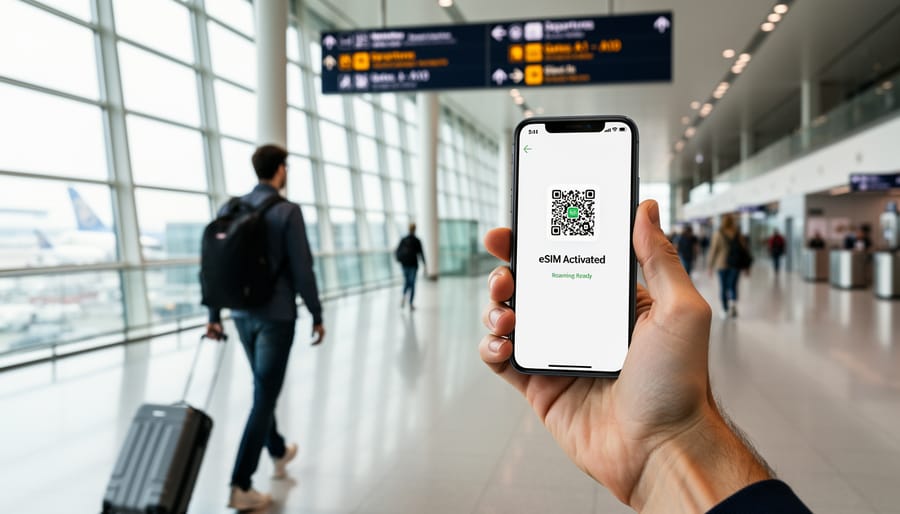
Connectivity diagnostic tools represent another category, helping identify whether connection issues stem from your eSIM profile, carrier settings, or device configuration. Students at technical universities have built open source troubleshooters that test network registration, APN settings, and roaming configurations, valuable when you’re standing at airport arrivals with no data.
These apps typically require minimal permissions and zero payment processing, making them ideal starting points for developers new to eSIM technology. They also complement commercial eSIM providers by filling gaps in user experience that large platforms don’t prioritize.
Research and Experimental Projects
These forward-thinking projects push beyond immediate utility, testing new paradigms for how eSIM profiles might be provisioned, recommended, or secured. University teams experiment with blockchain ledgers to create tamper-proof eSIM distribution records, eliminating single points of failure and enabling peer-to-peer profile sharing. Others integrate machine learning models, drawing on AI open-source frameworks, to analyze travel patterns, predict data usage, and suggest the most cost-effective plan combinations across regions. Decentralized network architectures explore eSIM activation through distributed nodes rather than centralized carrier APIs. While these projects rarely offer production-ready apps, they publish research papers, proof-of-concept code, and datasets that inform the next generation of commercial and open-source tools. Engaging with experimental repositories gives you early access to emerging techniques and opportunities to shape foundational standards before they reach mainstream adoption.
Profiles: Standout University eSIM Projects in 2026
The university community has delivered several impressive eSIM projects that demonstrate both technical innovation and practical value for travelers. These student and educator-led initiatives showcase how academic environments foster experimentation while addressing real-world connectivity challenges.
- ConnectU (University of Waterloo)A marketplace aggregator comparing 15+ eSIM providers with real-time price tracking, featuring a machine learning algorithm that predicts optimal purchase timing based on travel dates and destination patterns.
- OpenRoam (University of British Columbia)Privacy-focused eSIM manager with end-to-end encryption for stored profiles, developed by computer science students as part of their capstone project and now used by over 8,000 travelers.
- StudyAbroad eSIM Toolkit (McGill University)Specialized tool for international students offering academic institution partnerships, group discount coordination, and multi-semester plans across 60+ countries.
- TravelChain (Technical University of Munich)Experimental blockchain-based project exploring decentralized eSIM distribution, allowing peer-to-peer profile sharing and eliminating traditional provider intermediaries.
These open-source projects share common traits that make them particularly valuable: transparent pricing algorithms, active GitHub repositories with weekly commits, comprehensive documentation written for non-developers, and welcoming communities that encourage contributions from students at any skill level.
ConnectU stands out for its practical approach to solving a specific pain point. The Waterloo team surveyed 200 students about their travel eSIM frustrations and discovered that timing purchases correctly could save travelers 30-40% on identical plans. Their predictive model analyzes historical pricing data and sends notifications when rates drop for saved destinations.
OpenRoam took a different route, prioritizing security after team members experienced data breaches while traveling. The UBC project underwent external security audits and published the results publicly, building trust through transparency. Their work caught the attention of privacy advocates and led to speaking invitations at three international conferences.
The Open Source Projects Lounge has featured several of these initiatives, providing visibility and connecting project teams with potential contributors, mentors, and even funding opportunities. This kind of community support accelerates development and helps projects evolve from classroom experiments into tools that thousands of travelers rely on daily.
Recommendations: Which Type Is Right for You
For Budget-Conscious Students and Backpackers
When you’re stretching every dollar across multiple countries, university open source eSIM apps can be genuine lifesavers. Look for marketplace aggregators that let you compare dozens of travel eSIM plans side-by-side without markup fees. Projects like MIT’s TravelSIM Compare and UBC’s OpenRoam excel here, showing you the actual wholesale rates from providers like Airalo, Nomad, and regional carriers. The best student-built apps include currency converters, per-GB cost breakdowns, and filters for multi-country regional plans that cover entire continents on a single eSIM profile. Many also feature community-sourced price alerts when providers run promotions. Since these apps carry no profit margin and often skip expensive marketing partnerships, you can access the same travel eSIM plans commercial apps offer but save 15-30% by going direct through the open source interface.
For Tech-Savvy Travelers and Developers
If you’re comfortable with Git, APIs, and command-line tools, university open source eSIM projects offer a playground for customization. Look for apps with well-documented REST APIs that let you automate plan purchases, query coverage data, or build your own front-end interfaces. Projects using modular architectures, like microservices separating the eSIM provisioning logic from the UI, give you flexibility to swap components or integrate with your travel automation scripts.
The MIT and Apache 2.0 licensed projects are ideal here since they allow commercial use and modification without copyleft restrictions. Check the repository’s issue tracker and pull request activity: active maintainers who review contributions quickly make collaboration far more rewarding. Standout projects often include Docker containers for local testing, comprehensive API documentation with Postman collections, and developer-focused features like webhook support for plan activation events. If you’re traveling frequently, consider forking a project to add features like automated failover between providers, custom usage alerts, or integration with your VPN setup.
For Educators and Researchers Abroad
Academic travelers attending conferences, conducting field research, or collaborating with international institutions need eSIM solutions that prioritize data security and stable connectivity over cost alone. Look for university projects with strong encryption implementations and transparent data handling policies, critical when accessing institutional systems or sensitive research data abroad.
eSIM management tools that support multiple profile switching work well for researchers moving between countries during extended trips. Projects with detailed logging features help you track data usage and troubleshoot connectivity issues without relying on commercial support channels that may not understand academic workflows.
Choose apps with offline documentation and configuration options, since you might need to set up connectivity in remote research locations. Projects affiliated with universities known for cybersecurity research often undergo more rigorous security audits, providing additional peace of mind when handling confidential academic materials.
For First-Time eSIM Users
If you’ve never used an eSIM before, prioritize apps with comprehensive setup guides and responsive community forums. Look for projects from universities like the University of Waterloo’s TravelSIM project, which includes step-by-step video tutorials and a Discord server where students help troubleshoot activation issues. Choose apps with visual QR code installation flows rather than command-line interfaces, and verify the project has recent documentation updated within the past six months. Projects with dedicated beginner channels and FAQ sections will save you frustration when configuring your first profile.
Common Mistakes to Avoid When Choosing an Open Source eSIM App
Choosing a university open source eSIM app can feel liberating, but several common mistakes can turn that freedom into frustration. Understanding these pitfalls helps you evaluate projects more realistically and avoid compatibility headaches or security gaps.
One frequent error is assuming all open source projects are equally mature and stable. Not every university eSIM app has reached production-ready status. Some are proofs of concept, class assignments, or experimental research projects that lack the polish and reliability you need for actual travel. Check the repository’s release history, commit frequency, and issue tracker before trusting an app for an international trip. A project with no commits in six months and dozens of unresolved bugs isn’t your reliable travel companion.
Another trap is ignoring device compatibility requirements. Open source doesn’t mean universal compatibility. Some university projects target specific Android versions or iOS builds, and eSIM functionality itself varies across devices. Verify that your phone model appears on the tested devices list, and confirm the app supports your operating system version. Installing an app that can’t detect your eSIM hardware wastes time and creates unnecessary stress when you’re trying to get connected abroad.
Here are the most common mistakes travelers make when selecting university open source eSIM apps:
- Skipping the security audit history and assuming open source automatically means secure code
- Choosing based solely on star count or repository popularity without testing functionality
- Overlooking the licensing terms and restrictions on commercial or modified use
- Failing to verify which eSIM providers the app actually supports in your destination countries
- Ignoring user reviews and issue reports that reveal persistent bugs or poor support
- Not checking whether the project has documentation for troubleshooting common problems
- Assuming the university affiliation guarantees ongoing maintenance and updates
Many users also make the mistake of not testing the app before their trip. Download and configure the software while you still have reliable internet and local support. Try connecting to a provider’s test network or setting up a domestic eSIM profile if possible. Discovering the app crashes on launch or can’t parse QR codes when you’re standing in an airport overseas is a scenario you want to avoid.
Finally, overlooking the community support structure is a critical error. A GitHub repository without active discussion forums, responsive maintainers, or clear contribution guidelines signals a project that may leave you stranded if problems arise. The best university eSIM apps have vibrant communities where students, educators, and users help each other troubleshoot issues and share solutions. That support network becomes invaluable when you encounter unexpected compatibility problems or need guidance on specific providers.
How to Get Involved: Contributing to University eSIM Projects
Contributing to university open source eSIM projects doesn’t require you to be a computer science major or experienced developer. These student-led initiatives welcome participation at all skill levels, and your involvement helps strengthen the entire ecosystem while building your own expertise.
Start with Non-Code Contributions
Testing apps on your own devices and reporting bugs through GitHub issues is one of the most valuable contributions you can make. When you travel, document which eSIM providers work well, where coverage fails, and any quirky behavior you encounter. Write clear bug reports with device specs, OS version, and steps to reproduce the problem.
Documentation improvements are always needed. If you struggled to understand a setup guide, rewrite it more clearly. Translate documentation into other languages. Create video tutorials or screenshot-based walkthroughs for visual learners.
Code Contributions for Developers
Browse the project’s issue tracker for “good first issue” or “help wanted” tags. These are specifically curated for newcomers. Fork the repository, make your changes in a new branch, and submit a pull request with a clear description of what you’ve fixed or added.
Many university projects host weekly or monthly virtual meetings where contributors discuss roadmaps and review code together. Join these sessions even if you just listen at first.
Connect with Project Maintainers
Most university eSIM projects have Slack channels, Discord servers, or mailing lists. Introduce yourself, mention your travel plans or technical interests, and ask how you can help. Student maintainers genuinely appreciate fresh perspectives and are typically generous with mentorship.
Check if your own university has an open source club or hackathon where you could pitch starting a local eSIM project or contributing as a team to an existing one.

Frequently Asked Questions
Are university open source eSIM apps safe to use for travel?
Generally yes, provided the project has active maintenance and transparent code that can be audited by the community. Review the project’s commit history, security documentation, and whether it has undergone any third-party security reviews before trusting it with payment or personal data.
Will these apps work with my phone’s eSIM?
Most modern smartphones from 2019 onward support eSIM technology, but you need to check if your specific device model is compatible with the app’s supported platforms. University apps typically target iOS 13+ and Android 9+ devices with manufacturer eSIM support enabled.
Do university open source eSIM apps cost money?
The apps themselves are free to download and use since they’re open source, but you still need to purchase eSIM data plans from the providers they connect to. The advantage is transparent pricing and often lower costs due to the absence of commercial markup.
How do I find university eSIM projects to try?
Start by searching GitHub, GitLab, or university open source repositories for terms like “eSIM” or “travel connectivity.” Many projects are also showcased through university computer science departments, hackathon results, and open source community platforms.
Beyond the technical questions, many students and travelers wonder about support expectations. Unlike commercial apps with dedicated customer service teams, university projects rely on community forums, GitHub issues, and documentation. This can mean slower response times but also more transparent problem-solving where you can see exactly how issues get resolved. The trade-off becomes part of your learning experience and can contribute to professional growth if you engage with the community and help improve the project.
Another common concern revolves around app longevity. University projects may wind down after students graduate or funding ends. Look for projects with institutional backing, multiple contributors, or those that have transitioned to independent community maintenance. The best indicator is consistent commit activity over several semesters rather than a single burst of development.
University open source eSIM travel apps represent more than affordable connectivity, they’re a movement toward democratizing travel technology. These student and educator-driven projects prove that academic innovation can solve real-world problems while staying true to transparency, accessibility, and community values.
By choosing these apps, you’re not just saving money on data plans. You’re supporting students gaining hands-on experience in software development, networking, and user experience design. You’re backing research projects that challenge commercial monopolies and explore new approaches to mobile connectivity. You’re joining communities where your feedback shapes the product roadmap and your contributions, whether code, documentation, or bug reports, make a tangible difference.
The gap between academic research and practical application shrinks when projects like these reach travelers’ hands. Universities gain living testbeds for their innovations. Students build portfolios with real users. The broader open source ecosystem benefits from fresh perspectives and experimental approaches that commercial constraints would never allow.
Start by testing one of the apps profiled in this guide. Join their Discord or GitHub community. File an issue, suggest a feature, or simply share your travel experience. If you have technical skills, review the codebase or contribute a pull request. If you don’t, thorough testing and clear feedback are equally valuable.
These projects thrive on participation, not perfection. Your involvement, however small, helps prove that collaborative, transparent technology can compete with corporate alternatives while staying true to educational missions and user interests.