
Open-source multiplayer platforms are the foundational software systems that power Minecraft servers, enabling thousands of players to connect, build, and collaborate in shared virtual worlds. These platforms transform the base game into a canvas for community-driven experiences, from massive survival servers to educational classrooms and competitive minigame arenas.
The modern Minecraft ecosystem depends almost entirely on open-source infrastructure. When you visit where players can look for Minecraft servers nearly every entry runs on platforms like Paper, Spigot, or Fabric. These aren’t just technical tools. They’re collaborative projects maintained by students, hobbyist developers, and professional engineers working together to solve real problems: optimizing performance for hundreds of simultaneous players, adding custom gameplay mechanics, and creating moderation tools that keep communities safe.
What makes these platforms remarkable is their accessibility. A high school student learning Java can contribute meaningful code alongside industry veterans. Educational institutions use them to teach programming, game design, and server administration. Small community servers benefit from the same performance optimizations that power networks serving tens of thousands of players daily.
This article explains how open-source multiplayer platforms actually work beneath the surface, breaking down the technical concepts into practical terms. You’ll discover the major platform types and what distinguishes them, see how real communities and schools put these tools into action, and understand why the shift toward open-source development has fundamentally changed how Minecraft servers operate in 2026. Whether you’re considering running your first server, looking to contribute to an existing project, or simply curious about the infrastructure supporting your favorite online communities, you’ll find the technical knowledge and real-world context you need to understand this essential piece of gaming infrastructure.
What Open-Source Multiplayer Platforms Mean for Minecraft
Open-source multiplayer platforms are server software applications that let anyone host, run, and modify Minecraft multiplayer experiences, with the crucial difference that their underlying source code is publicly available for inspection, modification, and distribution. Unlike proprietary server solutions where the code remains locked behind corporate walls, these platforms operate under open-source licenses that grant users the freedom to see exactly how the software works, adapt it to their needs, and share improvements with others.
At their core, these platforms serve the same fundamental purpose as any Minecraft server software: they create the digital environment where multiple players can connect, interact, and build together in shared worlds. What sets them apart is the transparency and collaborative development model. When a university computer science class deploys a Minecraft server for a networking project, or when a student club customizes gameplay for a community event, they’re often building on code that thousands of developers worldwide have contributed to and refined.
- Open-source license
- A legal framework that permits users to view, modify, and redistribute software code freely, often requiring that derivative works remain open as well.
- Server software
- The application that runs on a host machine to create and manage the multiplayer game environment that Minecraft clients connect to.
- API
- Application Programming Interface, the set of tools and protocols that allow developers to extend server functionality without altering core code.
- Plugin ecosystem
- The collection of community-created extensions that add features like custom game modes, administrative tools, and specialized mechanics to servers.
- Fork
- A new project created by copying and independently developing an existing open-source codebase, often to pursue different design goals or optimizations.
- Community contribution
- Code improvements, bug fixes, documentation, and features submitted by volunteers who want to enhance the platform for everyone.
The distinction between proprietary and open-source approaches shapes everything from who can troubleshoot problems to how quickly security vulnerabilities get patched. Proprietary server software relies on a single company’s development team and release schedule. Open-source platforms, by contrast, benefit from distributed expertise, a student in Montreal might fix a rendering bug, while a developer in Vancouver optimizes memory usage, and both improvements become available to the entire community within days.
This transparency matters especially in educational contexts. When students can read the actual code that powers their server, they’re learning from real-world software architecture rather than treating it as a black box. They can trace how a player’s action in the game client triggers server-side logic, understand data structures that manage world state, and see patterns of professional software design in action.
How Open-Source Minecraft Server Platforms Work
The Server-Client Architecture

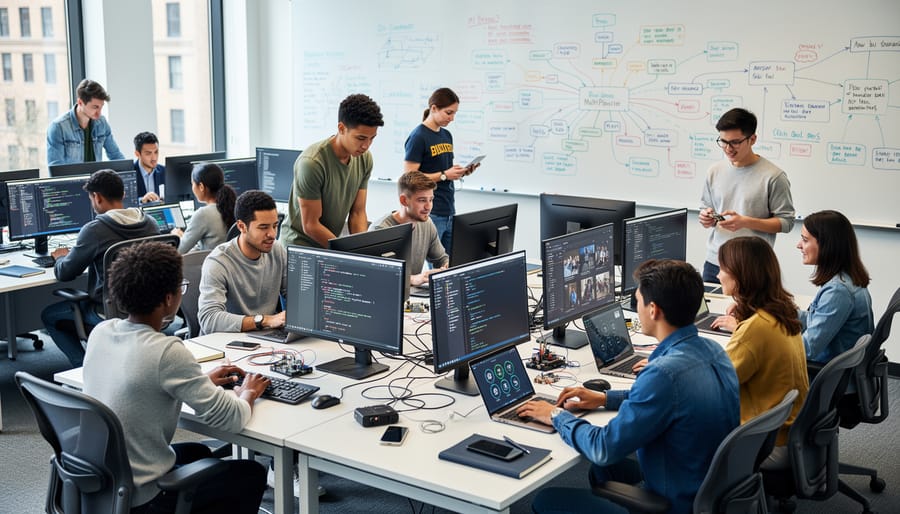
When a player launches Minecraft and clicks “Multiplayer,” they’re initiating a connection to a server running separate software, the server platform. This architecture splits responsibilities: your local Minecraft client handles graphics, sound, and input, while the remote server manages the authoritative game world, enforces rules, and synchronizes state across all connected players.
The server maintains a single source of truth. When you break a block, your client sends that action to the server, which validates it (checking permissions, tool requirements, and world state), updates its internal representation, then broadcasts the change to every nearby player. This prevents cheating and ensures consistency, what you see matches what others see.
Open-source platforms like Paper or Sponge sit between the network layer and Minecraft’s core logic. They intercept events (player joins, block breaks, entity spawns) before vanilla code processes them, allowing plugins to modify behavior without rewriting the entire game. A plugin might cancel a block-break event in a protected zone, or spawn custom mobs when a player enters a region.
This event-driven system makes modifications modular. Developers write code that listens for specific triggers and responds accordingly, rather than patching binary files. The server exposes these hooks through documented APIs, so student projects can add game modes, economy systems, or administrative tools by implementing clearly-defined interfaces, no reverse engineering required.
The Role of APIs and Plugin Systems
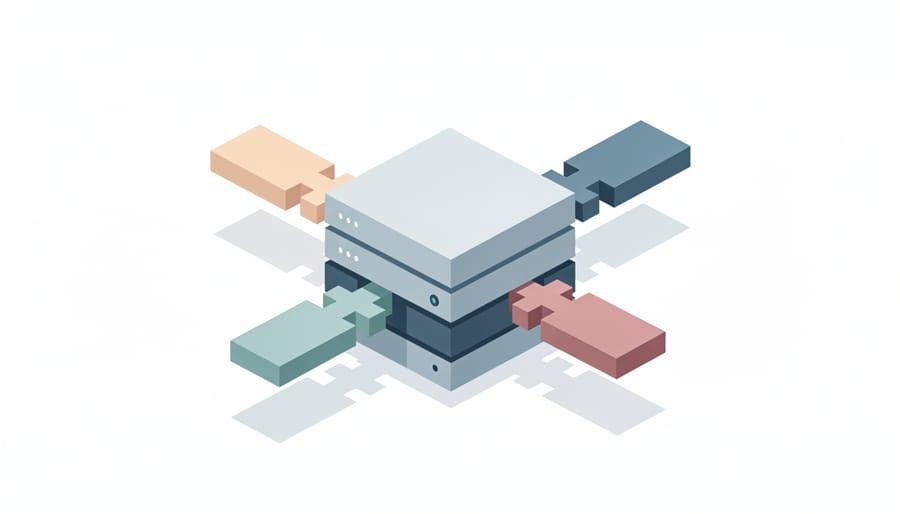
Open-source Minecraft server platforms expose Application Programming Interfaces that serve as bridges between the core server software and custom functionality. Rather than forcing developers to rewrite fundamental game logic, these APIs provide standardized methods for listening to game events, modifying player interactions, and introducing new mechanics. When a player breaks a block or sends a chat message, the platform fires an event that plugins can intercept and respond to, all without touching the underlying server code.
This separation of concerns is what makes server customization accessible to students and hobbyists. A developer writing an economy system doesn’t need to understand packet handling or world generation algorithms. They work with high-level API calls: deduct currency when a player purchases an item, check permissions before allowing a command, spawn particles at specific coordinates. The platform handles the complicated translation between these instructions and actual game state changes.
Plugin systems build on this foundation by offering dependency injection, configuration management, and lifecycle hooks. A plugin declares what events it cares about, registers its commands, and the platform loads it alongside dozens of others without conflicts. Platforms like Bukkit and Sponge popularized this architecture, enabling massive repositories of community-created functionality. Students learning Java or Kotlin can publish their first plugin within hours, gaining immediate feedback from real users while practicing software design patterns used throughout the industry.
Major Types of Open-Source Minecraft Server Platforms
Performance-Focused Platforms
Performance-focused platforms address a critical challenge in Minecraft server hosting: keeping the game playable when dozens or hundreds of players are online simultaneously. Paper, the most widely adopted platform in this category, emerged from the Spigot project with an explicit goal of reducing server tick lag without sacrificing compatibility with existing plugins.
The technical innovation lies in how these platforms handle entity tracking, chunk loading, and redstone calculations. Paper introduced asynchronous chunk loading, which processes world data in parallel rather than blocking the main game thread. This seemingly small change can reduce lag spikes by 40-60% on busy servers. Derivatives like Purpur and Pufferfish push optimization further, implementing experimental features like multi-threaded entity ticking and improved pathfinding algorithms.
For student-run servers operating on university hardware or modest cloud instances, these optimizations matter enormously. A vanilla Minecraft server struggles beyond 20 concurrent players on typical hosting; Paper-based platforms routinely handle 100+ players on comparable resources. This efficiency makes ambitious community projects financially viable for groups working with limited budgets.
Modding and Customization Platforms
Modding and customization platforms prioritize flexibility and developer autonomy over raw performance gains. Sponge stands out as a community-driven platform built on a comprehensive API that allows plugin developers to hook into nearly every aspect of server behavior without touching the underlying Minecraft code. This separation means plugins remain compatible across Minecraft updates more reliably than direct code modifications. Sponge supports both Forge and Vanilla environments, giving communities the option to run client-side mods alongside server plugins, a hybrid approach that appeals to technical university projects and student-run experimental servers.
Fabric represents a newer philosophy: lightweight, modular, and designed for rapid iteration. Rather than a monolithic API, Fabric provides minimal core hooks that developers extend through mixins, code injections that modify game behavior at the bytecode level. This approach attracts computer science students learning about software architecture and bytecode manipulation, as it offers direct insight into how Minecraft’s internals function. Fabric’s toolchain emphasizes modern development practices, including Maven builds and GitHub-based collaboration, making it ideal for portfolio projects where demonstrating clean, maintainable code matters as much as the end result.
Educational and Lightweight Options
Educational environments demand server platforms that prioritize simplicity, minimal resource overhead, and quick setup over advanced features. Platforms like Cuberite shine in these contexts, written in C++, it consumes significantly less memory and CPU than Java-based alternatives, making it ideal for older classroom computers or budget-conscious university labs. Its straightforward configuration suits instructors who need students running servers within minutes rather than hours.
Minestom represents another educational-focused option, built from scratch as a lightweight, API-driven server framework. Students learn server architecture by writing gameplay logic directly against its clean API, without navigating legacy code. Its reduced resource footprint allows dozens of student instances running simultaneously on a single lab server, perfect for parallel development workshops or collaborative coding exercises where hardware limitations would otherwise restrict participation.
How Minecraft Communities Use Open-Source Platforms
University and Educational Server Projects
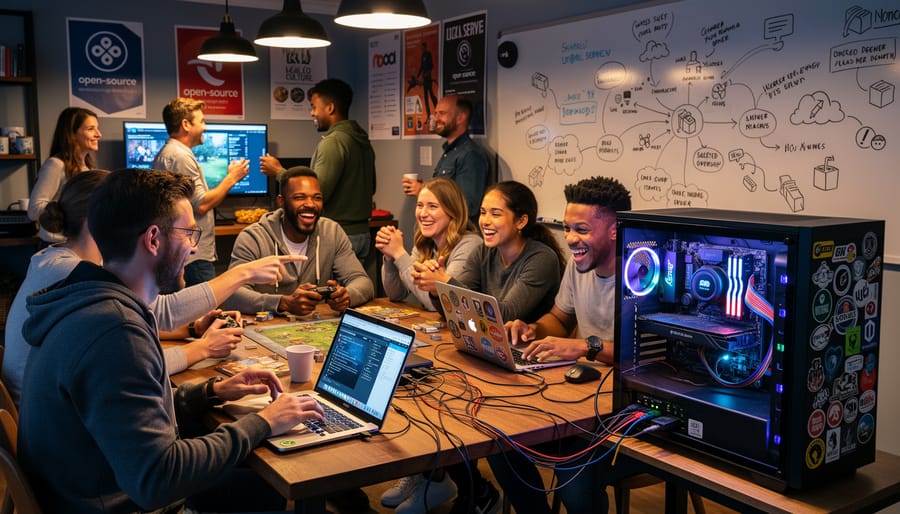
Canadian universities and colleges have embraced open-source Minecraft server platforms as practical teaching tools across computer science, game development, and interactive media programs. These platforms provide students with hands-on experience managing real server infrastructure while learning software architecture principles in an environment that feels more engaging than traditional lab assignments.
At the University of Toronto’s Department of Computer Science, instructors have integrated Paper-based servers into their distributed systems courses. Students work in teams to optimize server performance, implement custom plugins, and troubleshoot concurrency issues, all while managing live player loads. The transparency of the source code lets students trace how their modifications affect server behavior, making abstract concepts like thread management and network protocols tangible.
Concordia University’s game development program took this further by building a collaborative research server where students prototype gameplay mechanics for their capstone projects. Using Sponge’s flexible API, teams develop experimental game modes, test them with volunteer players from across campus, and iterate based on real feedback. The platform’s version control integration teaches students industry-standard Git workflows while they build portfolio-worthy projects.
George Brown College runs a student-managed community server as part of its game programming diploma. Teams rotate through roles, server administrator, plugin developer, community moderator, gaining practical DevOps experience. One team’s custom economy plugin grew into an open-source project with external contributors, giving students their first taste of managing a public codebase and handling community pull requests.
Student-Led Community Servers and Portfolio Projects
Student-led Minecraft servers have emerged as powerful portfolio pieces that demonstrate practical technical skills to future employers and graduate programs. When students build and maintain these servers using open-source platforms, they’re not just playing, they’re developing deployable infrastructure, writing production code, and managing real users with actual expectations.
A computer science student at the University of Waterloo transformed their Paper-based survival server into a comprehensive portfolio project by implementing custom economy plugins, automated backup systems, and player analytics dashboards. The GitHub repository showcasing this work became a talking point in multiple job interviews, demonstrating version control proficiency, API integration skills, and the ability to maintain long-running services.
These projects offer tangible proof of DevOps competencies that classroom assignments rarely provide. Students learn to troubleshoot memory leaks affecting real players, optimize tick rates for better performance, and implement security measures after experiencing actual attempted exploits. They manage release cycles, handle user feedback, and document their code, all while building something their peers genuinely enjoy using.
The technical depth varies widely, from simple plugin customization to complex multi-server networks with custom authentication systems, but each project represents hands-on learning that translates directly to industry expectations.
Collaborative Development and Open Contribution
Open-source Minecraft platforms function as live classrooms where students and hobbyists make real contributions to production software used by thousands of servers worldwide. A computer science student in Toronto can submit a bug fix to Paper’s codebase, receive feedback from experienced developers in Germany and Australia, and watch their code deploy to servers across six continents, all while building a verifiable portfolio of contributions. These platforms maintain transparent issue trackers where newcomers can find “good first issue” tags, participate in code reviews that explain not just what’s wrong but why, and gradually progress from documentation improvements to complex feature development. The collaborative workflows mirror industry practices: version control through Git, pull request reviews, continuous integration testing, and community discussion channels. Students gain experience negotiating technical decisions, defending architectural choices, and iterating based on constructive criticism, skills rarely taught in traditional coursework but essential for professional development careers.
Why Open-Source Platforms Are Becoming the Backbone of Modern Communities
Cost and Accessibility
Open-source Minecraft server platforms remove one of the biggest barriers to community building: cost. Students can download, install, and run platforms like Paper or Fabric without paying licensing fees, registration costs, or subscription charges. This matters enormously for university clubs operating on tight budgets, high school computer science programs with limited funding, and grassroots communities that can’t afford commercial server solutions.
The accessibility extends beyond just free software. Because these platforms run on commodity hardware and support cloud hosting on budget providers, a student group can launch a functional server for the cost of a basic VPS, often under $10 monthly. Educational institutions benefit particularly: a single computer science department can host dozens of student projects simultaneously without negotiating enterprise licenses or navigating procurement bureaucracy.
This financial openness enables genuine educational collaboration where learning happens through hands-on experimentation rather than permission-gated access. When technical and financial barriers disappear, communities form around shared interest instead of available funding.
Transparency and Trust
When server software controls everything from player data to chat logs, communities rightly question what happens behind the scenes. Open-source platforms answer that question by making their entire codebase public, anyone can audit how player information is stored, how administrative commands function, or whether data gets transmitted to third parties.
This transparency matters especially for educational servers handling student information or community projects governed by volunteer administrators. If a proprietary platform collects usage statistics or includes undocumented features, users have no way to verify claims about privacy. With open-source alternatives like Paper or Sponge, a computer science student can inspect the source code during a weekend project and confirm exactly what the server does.
Communities built on auditable code also benefit from collective security reviews. When vulnerabilities surface, the global developer community can verify fixes rather than waiting for a vendor’s promise that “the issue has been resolved.”
Learning and Skill Development
Working with open-source Minecraft server platforms provides hands-on experience with industry-standard tools and workflows. Students learn Git-based version control while managing plugin code, track issues and feature requests through platforms like GitHub, and participate in code reviews that mirror professional development practices. These projects naturally teach software architecture concepts, understanding how APIs interact, how modular systems scale, and how to write maintainable code that others can extend. Beyond technical skills, contributors learn to document their work clearly, communicate design decisions, and promote collaboration across distributed teams. Managing community servers adds experience with user feedback loops, troubleshooting production issues, and balancing feature requests against performance constraints. Employers increasingly value these demonstrated competencies, candidates who can point to active contributions in open-source repositories show they’ve already navigated real-world development challenges rather than just completed coursework.
Community Ownership and Longevity
Open-source platforms give communities genuine ownership of their infrastructure. When a server relies on proprietary software, its future hinges on a vendor’s roadmap or business viability. If that company pivots, raises prices, or shuts down, the community loses its foundation overnight.
With open-source server software, the code belongs to everyone. Communities can fork projects, maintain legacy versions, or migrate to alternatives without losing years of customization work. This independence matters especially for educational servers and long-running communities where continuity shapes member identity and institutional memory. Students graduating years apart can return to the same server environment because no corporation controls its survival.
Getting Started with Open-Source Minecraft Server Platforms
Starting your own open-source Minecraft server or contributing to an existing platform is more accessible than many students and educators assume. The technical barrier has lowered considerably, and the learning curve itself provides valuable hands-on experience with real development workflows.
If you’re deploying a server for the first time, begin by selecting a platform that matches your goals and technical comfort level. Paper is an excellent starting point for performance-focused servers, while Sponge offers deeper modding capabilities if customization is your priority. Most platforms provide comprehensive documentation with step-by-step setup guides tailored to different operating systems. You’ll need a computer or virtual machine with at least 2GB of RAM (4GB recommended for servers hosting more than ten players), Java Development Kit installed, and basic command-line familiarity.
For educational environments, consider platforms with active community support channels where students can ask questions and troubleshoot issues. Many university computer science programs encourage students to set up local test servers before deploying publicly, which teaches version control, configuration management, and debugging in a low-stakes environment.
Contributing code to these projects represents another pathway that directly supports open-source innovation while building portfolio-worthy experience. Start by exploring a platform’s GitHub repository, reading contribution guidelines, and identifying “good first issue” tags that maintainers mark for newcomers. Even non-coding contributions matter: documentation improvements, bug reports with clear reproduction steps, and community support all strengthen these ecosystems.
GitHub’s interface for forking repositories, creating branches, and submitting pull requests becomes familiar quickly through practice. Many platforms host Discord servers or forums where contributors discuss features, review code, and mentor newcomers. This collaborative environment mirrors professional software development more closely than academic coursework typically does.
Resource-wise, leverage official wikis, YouTube tutorials from experienced server administrators, and subreddits dedicated to specific platforms. Canadian universities running server projects often publish case studies and technical write-ups that demonstrate real implementation decisions and lessons learned.
The investment pays dividends beyond the immediate project. Students who successfully deploy and maintain servers develop troubleshooting resilience, learn infrastructure concepts, and gain concrete talking points for internship interviews and co-op applications.
Common Questions About Open-Source Minecraft Platforms
Do I need programming experience to contribute to open-source Minecraft platforms?
Not necessarily. While code contributions require Java knowledge, platforms welcome documentation writers, translators, bug reporters, and community moderators. Many students start by improving README files or answering questions before moving into development work.
Are open-source servers compatible with the regular Minecraft client?
Yes. Most open-source platforms maintain protocol compatibility with the vanilla client, so players connect using their standard Minecraft launcher. The server-side modifications enhance gameplay without requiring client-side changes in most cases.
What license should I look for when choosing a platform?
Common licenses include MIT, Apache 2.0, and GPL variants. MIT and Apache offer the most flexibility for modification and commercial use, while GPL requires derivative works to remain open-source. Check the specific license for your intended use case.
Where can I find help when problems arise?
Most platforms maintain Discord servers, GitHub discussion boards, and community forums. Documentation wikis cover common setup issues, and many universities host student groups where you can get peer support while learning to contribute to open source projects.
The collaborative nature of these platforms means you’re rarely troubleshooting alone. GitHub issue trackers let you search existing problems before posting new ones, and maintainers often respond within hours. For students at Canadian institutions, the Open Source Projects Lounge provides mentorship connections and peer learning opportunities specific to server development. Security concerns get addressed through public audits, responsible disclosure processes, and rapid community response to vulnerabilities. This transparency contrasts sharply with proprietary software where security flaws remain hidden until exploited. When evaluating platforms, check for active maintenance, recent commits, and responsive issue management as indicators of project health.
Open-source multiplayer platforms have fundamentally reshaped how Minecraft communities operate, moving from closed, vendor-dependent systems to transparent, collaborative infrastructure that mirrors the principles driving modern software development. These platforms don’t just enable gameplay, they create learning environments where students and educators can examine code, contribute improvements, and build technical skills with real-world relevance.
The shift toward open-source reflects values central to academic institutions: knowledge sharing, peer review, and collective advancement. When students deploy a Paper server or contribute a plugin to Sponge, they’re not just playing a game. They’re engaging with version control workflows, learning software architecture patterns, and participating in global development communities that function identically to professional teams.
For Canadian universities and colleges already emphasizing hands-on learning, these platforms offer a low-barrier entry point into DevOps, backend development, and community management. Students leave with portfolio projects that demonstrate tangible technical competence, skills that translate directly to careers in software engineering, system administration, and game development.
The accessibility of these platforms ensures that cost never becomes a barrier to learning. Any student with a computer can host a server, modify gameplay mechanics, or collaborate with peers across continents. That democratization of technology strengthens not just individual skill sets but entire communities built on shared ownership and long-term sustainability.
Whether you’re an educator designing a course, a student seeking practical experience, or a community organizer building infrastructure, the open-source Minecraft ecosystem offers a path forward grounded in transparency, collaboration, and genuine skill development.