
Open source innovation is the practice of developing, improving, and distributing technology through publicly accessible code and collaborative communities, enabling anyone to contribute ideas, solve problems, and create new applications without traditional gatekeeping barriers. This approach has fundamentally reshaped how software evolves, turning innovation from a closed-door corporate process into a global conversation where a student in Manila can fix a bug affecting millions, or a research team in Berlin can build on tools created by developers in São Paulo.
The model works because it inverts the traditional innovation pipeline. Instead of a single organization controlling development from conception to release, open source projects draw on distributed expertise, with contributors adding features, identifying vulnerabilities, and adapting code for specialized uses. The result is software that evolves faster, serves more diverse needs, and often outperforms proprietary alternatives. Linux powers most of the world’s servers. Firefox pioneered browser privacy features that competitors later adopted. TensorFlow democratized machine learning for researchers and startups alike.
What makes open source particularly compelling in 2026 is its accessibility. You don’t need venture capital, a computer science degree, or permission from a corporate board to participate. Students contribute documentation. Designers improve interfaces. Domain experts from healthcare, education, and climate science shape tools for their fields. The barriers to entry are lower than in almost any other innovation ecosystem, and the potential impact is global.
This article explains how open source innovation actually functions, the different forms it takes, and how you can engage with it whether you’re writing your first line of code or leading a research lab. We’ll profile student projects that grew into widely used tools and examine collaboration patterns that turn individual contributions into breakthrough technologies.
What Open Source Innovation Means
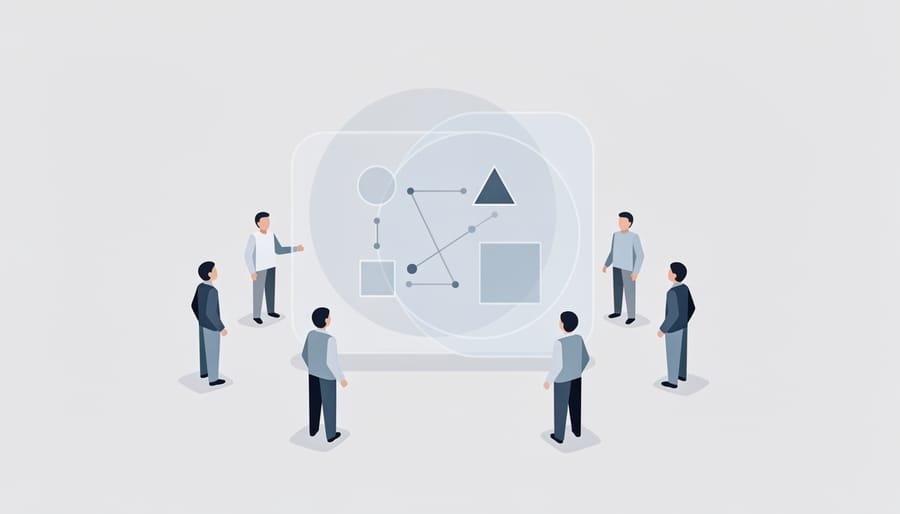
Open source innovation represents a fundamental shift in how technology gets created and improved. Instead of keeping code locked away behind corporate walls, it makes source code freely available for anyone to view, modify, and distribute. This openness transforms software development from a closed activity into a collaborative process where students in Halifax might contribute to the same project as engineers in Silicon Valley or researchers in Toronto.
The model rests on four interconnected principles. Transparency means anyone can inspect how the software works, spot flaws, and understand the logic behind technical decisions. Collaborative contribution allows developers from different organizations to work on the same codebase, pooling expertise that no single company could match. Community-driven improvement harnesses the collective intelligence of users who identify problems, suggest features, and submit code changes based on real-world needs. Shared knowledge ensures that insights and solutions benefit everyone rather than remaining proprietary secrets.
- Open Source
- Software whose source code is publicly available for anyone to inspect, modify, and redistribute under licenses that protect these freedoms.
- Collaborative Development
- A process where multiple contributors from different organizations work together on the same codebase, often asynchronously across time zones.
- Transparency
- The practice of making all code, development discussions, and decision-making processes publicly visible and accessible.
- Community Contribution
- Voluntary participation by individuals who improve software through code, documentation, testing, design, or support regardless of employment status.
- Forking
- Creating an independent copy of a project to develop in a different direction, which is permitted and sometimes encouraged under open source licenses.
- Peer Review
- The process where community members examine proposed code changes for quality, security, and compatibility before they’re accepted into the main project.
This stands in stark contrast to proprietary development, where companies guard their code as competitive advantage and limit who can contribute. A student cannot improve Microsoft Word’s spell checker, no matter how skilled they are. But that same student can enhance the spell checker in LibreOffice, contribute to VS Code, or build entirely new tools using open frameworks. The barrier to participation drops from employment status to demonstrated ability and willingness to learn.
What makes this model genuinely innovative is how it distributes both the work and the benefits. A computer science student might fix a bug that helps researchers worldwide. An educator can adapt educational software for their specific classroom needs. Industry professionals solve their company’s problems while improving tools that competitors also use. Everyone contributes according to their skills and available time, and everyone gains access to solutions they couldn’t have built alone.
How Open Source Innovation Works

The Role of Academic Institutions
Universities and colleges serve as natural incubators for open source innovation by removing many obstacles that typically constrain individual contributors. Students gain access to computing infrastructure, development tools, and legal frameworks that would be costly or complicated to secure independently. More importantly, they work within structured environments where experimentation is encouraged rather than penalized, failure becomes a learning opportunity rather than a career risk.
Academic institutions connect students with faculty advisors who understand both the technical challenges of software development and the social dynamics of open source communities. This mentorship proves invaluable when students encounter their first merge conflicts, navigate community disagreement, or struggle to articulate the value of their contributions. Professors often have established relationships within open source ecosystems, opening doors that would remain closed to newcomers working alone.
The classroom itself becomes a testing ground. Students tackle assignments that mirror genuine problems facing open source projects: improving documentation, adding features requested by users, fixing reported bugs, or optimizing performance. These aren’t artificial exercises, they’re contributions that matter to actual projects, creating real-world impact while students develop professional skills.
Perhaps most significantly, universities foster peer collaboration. Students work alongside classmates with complementary skills, designers, testers, technical writers, experiencing the multidisciplinary nature of successful open source projects. This environment normalizes asking questions, sharing knowledge, and collective problem-solving, habits that define productive open source communities beyond graduation.
Industry-Academia Collaboration in Practice
Industry-academia collaborations transform open source projects from student exercises into production-ready solutions. Companies sponsor specific projects aligned with their technical needs, providing real problem statements instead of hypothetical scenarios. A financial services firm might challenge students to improve data pipeline efficiency in an existing open source tool their developers actually use. The company gains fresh perspectives and code contributions without the overhead of formal employment, while students work on problems with genuine constraints and stakeholder expectations.
These partnerships typically follow structured frameworks. Companies designate technical mentors who review pull requests, attend sprint planning sessions, and provide context about production requirements. Students commit to delivery timelines and code quality standards matching professional environments. Universities facilitate through capstone programs or directed study courses that provide academic credit while students contribute meaningful work.
The mutual benefits extend beyond immediate code contributions. Students build portfolios with verifiable impact, they can point to merged code running in commercial systems. Companies identify potential hires who’ve already demonstrated competence with their technology stack. Both parties promote collaboration skills that translate across contexts: asynchronous communication, documentation discipline, and navigating disagreement constructively.
Successful collaborations often begin small. A company might sponsor a single feature or documentation improvement before committing to larger initiatives. This iterative approach lets both sides establish trust and refine expectations before scaling the partnership.
Forms of Open Source Innovation
Open source innovation takes many forms, each serving distinct purposes while sharing the same collaborative foundation. Understanding these categories helps you identify where your skills, interests, and resources can make the greatest impact.
The landscape of open source innovation includes:
- Greenfield projects that create entirely new tools to solve previously unaddressed problems
- Contributions to established projects that enhance existing software with new features or improvements
- Educational platforms designed specifically for teaching and learning environments
- Research tools that enable reproducibility and advance scientific inquiry
- Infrastructure and tooling that supports other developers and projects
- Documentation and accessibility improvements that make technology more inclusive and usable
Greenfield projects represent the most visible form of innovation: building something from scratch. Students often launch these when they identify a gap in available tools, whether that’s a scheduling system tailored to university needs or a data visualization library for a specific research domain. These projects carry the highest risk but also offer complete creative control and the satisfaction of birthing something entirely new.
Contributing to established projects might seem less glamorous, but it drives substantial innovation. Adding a feature to a widely-used framework, optimizing performance in a popular library, or fixing long-standing bugs all advance the state of technology. This approach lets you learn from mature codebases, connect with experienced maintainers, and see your work immediately reach thousands of users.
Educational software occupies a special niche, addressing the unique challenges of teaching and learning. Projects like interactive coding tutorials, automated grading systems, or collaborative lab notebooks solve real pedagogical problems while giving students hands-on development experience. These tools often appear in an open source journal showcasing innovation in academic technology.
Research reproducibility tools tackle a critical challenge in modern science: ensuring others can verify and build upon published findings. Whether you’re creating containerized environments for computational experiments, version control systems for datasets, or pipelines that automate analysis workflows, these projects directly advance knowledge while teaching rigorous development practices.

Real-World Applications and Impact
Student Project Spotlight: Innovation in Action
At the University of Waterloo, a team of computer science students noticed that their professors struggled to collect anonymous feedback during large lectures. Commercial polling software either cost too much or required students to create accounts, creating friction that reduced participation. In response, the team built QuickPulse, a lightweight web application that lets instructors generate instant polls accessible via QR code, with no login required.
The students started with a minimal viable product during their winter semester, releasing the code on GitHub under an MIT license. Initial adoption came from within their own classes, where professors appreciated the zero-setup approach. As the team refined the interface based on user feedback, other Canadian projects took notice, and instructors at McGill and UBC began deploying QuickPulse in their courses.
The breakthrough came when the team added accessibility features after a visually impaired student submitted detailed feedback. Screen reader compatibility and keyboard navigation transformed QuickPulse from a convenience tool into an inclusive platform. Within eight months, the application had been adopted by over forty instructors across seven institutions, processing more than 100,000 anonymous responses.
Beyond the code itself, the students gained practical experience with user research, iterative development, and maintaining public documentation. Two team members used their work on QuickPulse to secure internships at companies that valued their demonstrated ability to build tools solving real problems. The project continues to evolve, now maintained by a new cohort of students who inherited both the codebase and the responsibility of serving a growing user community.
Why Open Source Accelerates Innovation
Open source models accelerate innovation by fundamentally changing how knowledge and effort compound over time. When code is public, developers worldwide can see what’s already been built, which means they don’t waste months recreating solutions that already exist. A student in Vancouver can pick up where a team in Montreal left off, building on their foundation rather than starting from scratch. This cumulative approach turns innovation into a continuous relay rather than isolated sprints.
The diversity of contributors creates a natural advantage in problem-solving speed. A proprietary team might have five engineers approaching a challenge from similar backgrounds and training. An open source project might have fifty contributors across universities, companies, and continents, each bringing distinct perspectives and expertise. When someone hits a roadblock that stumps them for days, another contributor often recognizes it immediately as something they’ve solved before in a different context.
Transparent peer review catches errors and security flaws faster than any internal quality assurance process. Thousands of eyes examining code means vulnerabilities get spotted and patched quickly, often within hours of being introduced. This isn’t just theoretical, major open source projects routinely demonstrate security response times that proprietary vendors struggle to match. The public nature of the work creates accountability that improves quality.
Lower barriers to entry expand the pool of potential innovators dramatically. You don’t need institutional affiliation, expensive licenses, or permission to contribute. A first-year student with a good idea can submit code to projects used by millions. This meritocracy means talent drives progress regardless of credentials, which surfaces innovative approaches that gatekept systems would miss entirely.
The open source model excels particularly for foundational tools, standards, and infrastructure where broad adoption matters more than competitive advantage. When everyone can study, modify, and improve the underlying technology, innovation happens in parallel across countless use cases, each feeding improvements back to the core. Proprietary development simply can’t match that distributed innovation engine.
Getting Started with Open Source Innovation
Starting your open source journey doesn’t require expert-level skills or institutional affiliation. The barrier to entry is lower than most people assume, and the learning curve flattens quickly once you engage with a welcoming community.
Begin by identifying projects to contribute to that align with technologies you’re learning or problems you find compelling. GitHub’s “Explore” feature surfaces repositories tagged with labels like “good first issue” or “beginner-friendly,” which maintainers use to signal accessible entry points. Read through recent pull requests to understand the project’s contribution style and community tone before diving in.
Most repositories include a file that outlines expected workflows: how to fork the repository, create feature branches, submit pull requests, and respond to feedback. Follow these guidelines precisely for your first few contributions. Maintainers appreciate contributors who respect established processes, even when the initial contribution is small.
Non-developers have numerous pathways into open source innovation. Documentation improvements, user experience testing, accessibility audits, visual design, and community moderation all advance projects meaningfully. Many critical innovations stall not from lack of code but from poor documentation or unclear onboarding, making these contributions genuinely valuable.
Once you’ve made several contributions to existing projects, consider launching your own if you’ve identified an unmet need. Start small with a clear, focused problem rather than an ambitious platform. Document your work thoroughly from day one, both to attract collaborators and to clarify your own thinking. Announce your project in relevant forums, university clubs, and developer communities to find early adopters who can shape the direction.
Practical steps forward include:
- Explore repositories in languages or domains you’re already studying
- Start with documentation fixes or test coverage to learn the codebase
- Engage respectfully with maintainers through issues before submitting code
- Identify gaps in tooling, accessibility, or documentation you can address
- Document your learning process publicly to help others and demonstrate growth
- Build a portfolio linking to merged contributions and launched projects
Connect with local university open source clubs, attend virtual community meetings for projects you follow, and participate in programs like Google Summer of Code or Outreachy that pair newcomers with mentors. The open source community rewards consistent, thoughtful participation more than isolated bursts of activity.
Common Questions About Open Source Innovation

Who owns the code I contribute to an open source project?
The code remains under the project’s open source license, which typically means you retain copyright while granting broad usage rights to everyone. You’re free to use your own contributions however you want, and the community can use them too.
Do I need to be an expert programmer to participate?
No. While coding skills help, successful projects need documentation writers, designers, testers, translators, and community managers. Many contributors start by fixing typos in documentation or reporting bugs before writing any code.
How much time should I commit to open source work?
Start small with a few hours monthly. Even occasional contributions build skills and connections. Many students dedicate 5-10 hours weekly during semester breaks, then scale back during exams.
How do I find a mentor in open source development?
Active project communities often pair newcomers with experienced contributors. Look for projects with “good first issue” labels and welcoming contribution guides, then ask questions in their communication channels.
Do companies value open source experience when hiring?
Yes, especially in technology roles. A public contribution history demonstrates real-world collaboration skills, code quality, and initiative that resumes alone can’t show.
Can educators integrate open source projects into coursework?
Absolutely. Many professors structure assignments around contributing to real projects, giving students practical experience while benefiting the broader community. This approach connects classroom theory to industry practice.
Beyond these fundamentals, students often worry about making mistakes in public repositories. The truth is that errors are expected and correctable. Version control systems track every change, making it simple to revert problems. Most projects welcome learners who show effort and respect community guidelines, even when their initial attempts need refinement.
The intellectual property question sometimes confuses newcomers who’ve worked on proprietary academic projects. Open source licenses don’t prevent you from discussing your work in portfolios or job interviews. You can showcase code you’ve written, explain your problem-solving approach, and demonstrate your ability to collaborate with distributed teams. The transparency actually strengthens your professional narrative rather than limiting it.
Balancing contributions with academic deadlines requires strategic planning. Treat open source work like any other commitment by scheduling specific blocks rather than working randomly. Many students find that fixing a single bug or updating one documentation page during study breaks provides mental variety without derailing coursework. The key is consistency over intensity.
Finding the right project matters more than jumping into the most popular repository. Choose something you genuinely use or a problem space that interests you. When the work aligns with your curiosity, the time investment feels less like obligation and more like exploration. That authentic engagement shows in the quality of your contributions and the connections you build within the community.
Open source innovation represents one of the most accessible pathways into meaningful technological work available today. Unlike traditional development models that require formal credentials or corporate sponsorship, collaborative open source projects welcome anyone with the willingness to learn and contribute. This democratizing quality makes it particularly valuable for students building practical skills while creating real solutions that people actually use.
The bridge between academic learning and industry application becomes remarkably short when you engage with open source software. You’re not simulating problems or completing assignments that vanish after grading, you’re solving genuine challenges alongside professionals, researchers, and fellow students from institutions worldwide. The code you write, the documentation you improve, and the bugs you identify become part of living projects that evolve and serve communities long after your initial contribution.
Canadian universities increasingly recognize this model as essential preparation for technology careers. Students who participate in open source development graduate with portfolios demonstrating collaboration across time zones, version control proficiency, peer review experience, and the ability to navigate complex codebases, exactly what employers value. Educators gain opportunities to connect coursework with active projects where students see immediate relevance.
The collective impact compounds as more contributors join. Each improvement builds on previous work, creating momentum that individual efforts or isolated teams rarely achieve. Whether you’re exploring open source as a student seeking hands-on experience, an educator designing practical learning opportunities, or a professional looking to give back, you’re participating in a proven model for advancing technology through shared knowledge and collaborative effort.