
Kisspeptin-10 is a short chain of ten amino acids, the active fragment of the larger kisspeptin protein, that researchers study for its role in switching on the body’s reproductive hormone system. The kisspeptin-10 research peptide binds to a receptor on specialized neurons in the brain, which then trigger the release of gonadotropin-releasing hormone (GnRH). That signal sits near the very top of the chain that eventually shapes the production of sex hormones, which is why scientists treat it as a master regulator rather than just another messenger.
Why does that matter beyond the lab? Understanding the first step in a cascade helps explain how puberty begins, how fertility is regulated, and what can go wrong along the way. This article walks through the biology in plain language, explains the terms you’ll meet in the literature, and covers what scientists actually use the peptide for. Whether you’re a student building a first literature review, an educator looking for a clear explainer, or a curious reader from outside the lab, you’re welcome here. Good science depends on many kinds of contributors, and clear explanations help everyone join the conversation.
What Kisspeptin-10 Means: A Plain-Language Definition
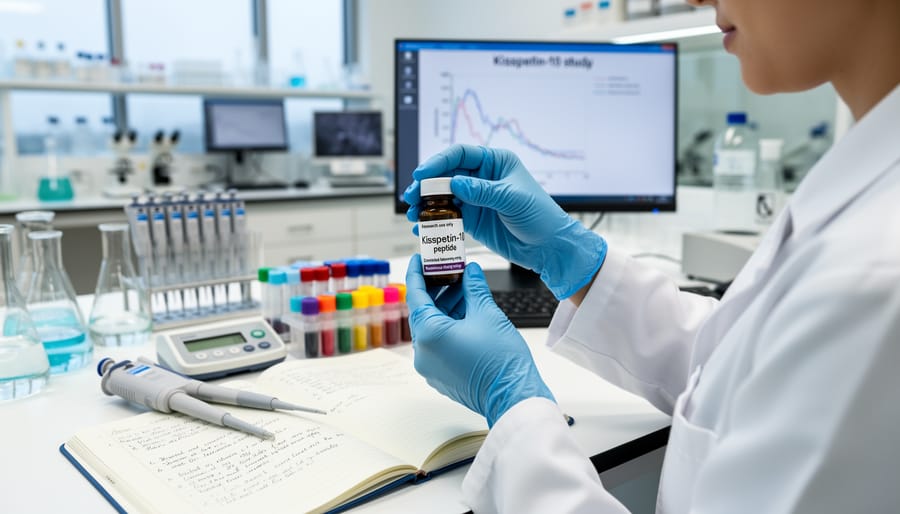
A peptide is a short chain of amino acids, the small building blocks that cells link together to make the molecules that do their work. Think of it as a short sentence compared with a full protein, which is more like a whole paragraph. Because peptides are compact, the body uses many of them as quick chemical messages between cells.
Kisspeptin-10 belongs to this family of messengers. It is the shortest naturally occurring fragment of the kisspeptin family that still stays biologically active, made of just ten amino acids. The longer kisspeptins are all produced from a single instruction in our DNA, the KISS1 gene, and the ten-amino-acid tail is the part that does the essential signaling job.
Here are a few terms worth having in your pocket:
- Amino acid
- One of the small molecular units that link together, like beads on a string, to form peptides and proteins.
- KISS1 gene
- The stretch of DNA that carries the instructions for making the kisspeptin family of peptides.
- Neuropeptide
- A peptide that nerve cells use to communicate with one another or to trigger signals elsewhere in the body.
- KISS1 receptor (GPR54)
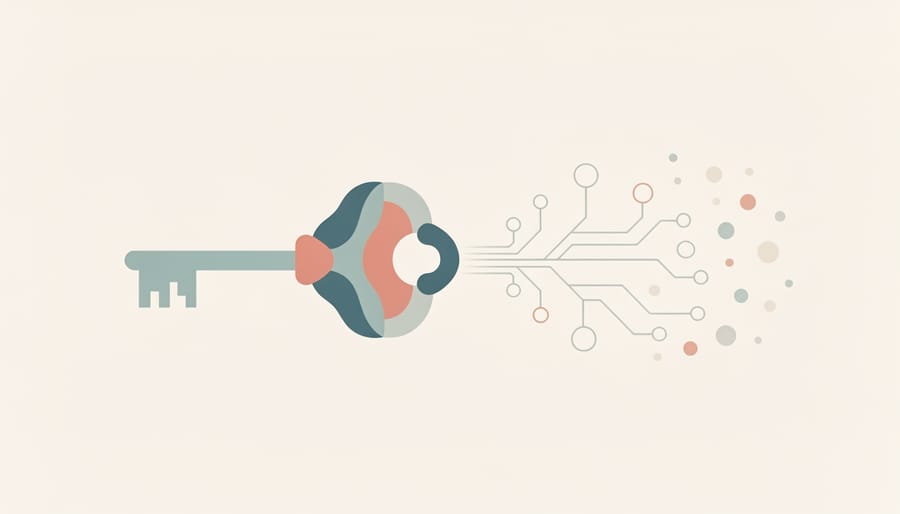
- The docking site on certain cells that kisspeptin attaches to, much like a key fitting a lock, which starts a response inside the cell.
- GnRH
- Gonadotropin-releasing hormone, a signal made in the hypothalamus (a small control center deep in the brain) that sets reproductive hormones in motion.
The history is a good reminder that science rarely follows a straight line. KISS1 was first identified in the 1990s during cancer research, when scientists noticed it seemed to suppress the spread, or metastasis, of certain tumor cells. That origin is why it was originally called a “metastasis suppressor.” Only later did researchers discover that the same system plays a central role in reproductive biology, which is where most of the interest in Kisspeptin-10 sits today. It’s a nice example of how open, curious inquiry across different fields can reveal connections no one planned for.
How Kisspeptin-10 Works in the Body
The Signaling Chain From Brain to Hormone Release
Think of the hypothalamic-pituitary-gonadal (HPG) axis as a three-stage relay. The hypothalamus, a small region at the base of the brain, sends the first signal. The pituitary gland just below it passes the message along. The gonads (the ovaries or testes) carry out the final response.
Kisspeptin-10 sits at the very start of that relay. It binds to the KISS1 receptor on GnRH neurons, which prompts them to release gonadotropin-releasing hormone in pulses. That GnRH then tells the pituitary to release LH and FSH, which travel through the bloodstream to the gonads.
There’s an important catch: Kisspeptin-10 is cleared from the body quickly, with a half-life measured in minutes rather than hours. The effect is brief and tightly timed, so researchers can’t simply give it once and check back later. Study designs often rely on frequent blood sampling around administration, or on continuous infusion, to capture the hormone response as it unfolds. Understanding this timing is the key to reading, and comparing, kisspeptin studies accurately.
Kisspeptin-10 Compared With Other Kisspeptin Fragments
Kisspeptin-10 is one member of a family of related peptides, all cut from the same precursor protein encoded by the KISS1 gene. The longest natural form is kisspeptin-54, which is 54 amino acids long. Shorter versions, kisspeptin-14 and kisspeptin-13, are trimmed pieces of that larger chain, and Kisspeptin-10 is the shortest of the group.
What ties them together is the tail end. All of these fragments share the same ten amino acids at their C-terminal end, and that stretch is what binds the KISS1 receptor and switches it on. So Kisspeptin-10 keeps the core receptor-binding activity even though it is far smaller than kisspeptin-54.
Where they differ is length and behavior in the body. Longer forms can persist differently and may interact with other molecules in ways a short fragment doesn’t, while Kisspeptin-10 is cleared quickly. Researchers weigh those differences when choosing which fragment suits a particular experiment.
How Kisspeptin-10 Is Used in Research Settings
Reproductive and Neuroendocrine Studies
The most mature evidence for Kisspeptin-10 sits in reproductive and neuroendocrine biology. People with mutations in the KISS1 receptor gene often fail to enter puberty, which showed researchers that this signaling pathway is essential for reproductive development.
To map how the system responds, scientists give controlled, measured doses of the peptide and then sample blood at set intervals. Tracking LH and FSH over time shows how strongly and how quickly the hypothalamic-pituitary axis reacts. Because Kisspeptin-10 clears quickly, these studies rely on tightly timed sampling.
Here is how the main research areas compare:
- Puberty onset: kisspeptin signaling helps trigger the hormonal changes of puberty (established).
- Ovulation and the menstrual cycle: it appears to shape the LH surge that precedes ovulation (established, still being refined).
- Fertility signaling: researchers examine how it regulates GnRH pulses and reproductive hormones in both sexes (established to emerging).
- Therapeutic and diagnostic use: studies explore whether it can help assess or influence reproductive function (emerging).
Even in these better-studied areas, details such as optimal timing and long-term effects are still being worked out.
Emerging and Exploratory Directions
Beyond the well-mapped reproductive work, researchers are probing several newer questions. Kisspeptin receptors turn up in tissues linked to energy balance, so some groups are asking whether the peptide helps coordinate metabolism and appetite. Others have explored small human studies on mood, sexual brain processing, and emotional responses, using brain imaging alongside controlled administration. There is also continuing interest in how kisspeptin signaling shifts in conditions such as polycystic ovary syndrome and hypothalamic amenorrhea.
It helps to be candid about the limits here. Many of these findings come from animal models or small human cohorts, often with short-term designs, so results can be hard to replicate and may not carry over to broader populations. Effects seen in one species frequently differ in another. Optimal study conditions, long-term outcomes, and underlying mechanisms are still open questions. Treat these directions as promising hypotheses, not settled conclusions.
Reading Peptide Research With a Critical Eye

You don’t need a biology degree to read peptide research well. You need a few good habits, and they’re open to everyone: students, educators, developers, and curious readers alike.
Start with where a claim comes from. Peer-reviewed papers have been checked by independent experts before publication, which makes them a stronger foundation than a product page or a social media post. Many open-access journals and public databases like PubMed let you read the original studies without a paywall, so you can check what a study actually found instead of trusting someone’s summary.
Next, notice what kind of study you’re reading. Results from cells in a dish (in vitro), from animal models, and from human trials answer very different questions, and a finding in rats doesn’t automatically carry over to people. Look at sample size too. A handful of participants can suggest a pattern, but it can’t prove one. And treat words like “proven,” “breakthrough,” or “miracle” as warning signs, because careful researchers usually describe their results with caution.
It also helps to know the regulatory reality. Kisspeptin-10 is a research compound, not an approved therapy, so anything you read about it should be understood as science in progress. For any health decision, talk to a qualified professional rather than relying on a paper or an article like this one.
Life-science research is rarely a solo effort. Interdisciplinary teams bring together clinicians, statisticians, writers, and students who help with data analysis and build open-source tooling to make results easier to share and reproduce. That spirit of educational collaboration is the same one behind many open-source projects and it means there’s a useful role for almost any skill set.
Common Questions About Kisspeptin-10
Is Kisspeptin-10 a hormone or a peptide?
Both labels can apply. It’s a peptide because it’s a short chain of ten amino acids, and researchers treat it as a signaling molecule that acts on the brain’s reproductive hormone pathway.
How is it different from kisspeptin-54?
Kisspeptin-54 is the longer natural form, while Kisspeptin-10 is the shortest fragment that still activates the KISS1 receptor. The two differ in length and stability, but they share core receptor-binding activity.
Is it approved for human use?
No. Kisspeptin-10 is a research compound, not an approved therapy, so any health decision belongs with a qualified professional.
What does the research say about its half-life?
Studies describe it as short-lived in the body, which shapes how researchers design experiments and time their measurements.
Where can I read the original studies?
PubMed indexes the primary literature, and many journals offer open-access articles anyone can read for free.
That last point matters more than it might seem. Primary papers are open to students, educators, and curious readers alike, much like the shared, community-driven spirit behind open-source innovation. You don’t need a lab coat to start reading, only patience and a willingness to look up unfamiliar terms as you go.
Kisspeptin-10 is a short chain of amino acids, the smallest naturally occurring fragment of the kisspeptin family, and it acts early in the reproductive signaling chain. By binding to the KISS1 receptor on GnRH neurons, it sets off a relay that ends in LH and FSH release. That core idea has made it a useful tool across reproductive endocrinology, neuroendocrine mapping, and a handful of exploratory areas still waiting for stronger evidence.
It’s worth remembering that this is a research compound, not an approved therapy, and nothing here replaces advice from a qualified professional.
What makes this field exciting is how open it is. Like open-source software, progress in peptide science comes from transparent methods, shared data, and people checking one another’s work. You don’t need a lab coat to take part. Read the primary papers on PubMed, ask questions when a claim seems too tidy, and bring whatever skills you have, whether that’s data analysis, clear writing, or building tools that help others explore the evidence. Every curious reader strengthens the conversation.